The USDA’s Agricultural Statistics Service latest Crop Progress report shows planting progress humming along across major crop-producing states for the week ending May 10, 2026.
Corn leads the way
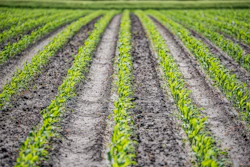
Corn planting hit 57% completion across 18 major producing states. That’s just shy of last year’s 59% but comfortably ahead of the 52% five-year average.
What’s really impressive? Corn emergence reached 23% for the week, nearly double last year’s 13% and well above the 19% five-year average. The 18 states tracked represent 91% of the nation’s 2025 corn acreage.
Soybeans surge, wheat slows
Soybean farmers are making solid progress, with planting reaching 49% across 18 states that account for 96% of total acreage. That’s ahead of last year’s 45% and crushing the 36% five-year average. Emergence hit 20%, outpacing last year’s 16% and the 12% average.
Spring wheat planting in six key states reached 53% completion, down from 63% last year but roughly in line with the 51% five-year average. Those six states represent 100% of the 2025 spring wheat acreage.
Other crops stay on track
Rice farmers are nearly done, with planting at 84% completion across six states, ahead of the 77% five-year average. Emergence stood at 69%, well above the 57% average.
Barley planting in five states hit 65% completion, compared to 61% last year and a 58% five-year average. Those states planted 81% of the 2025 barley acreage.
Field conditions mixed
Farmers had an average of 5.42 days suitable for fieldwork across reporting states. Pasture and range conditions weren’t great, just 31% rated good to excellent nationally, with 28% fair and 41% poor to very poor.
The report is based on survey data from about 3,600 respondents whose work gives them regular contact with farmers in their counties.