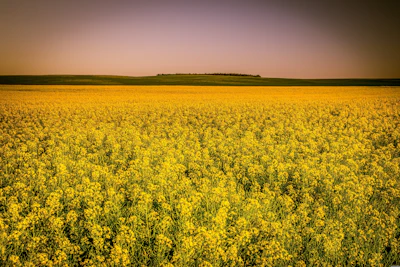
High Plains canola growers could begin harvest earlier than usual this spring due to unseasonably warm weather that has accelerated crop development, according to Scoular, a grain marketing and processing company. The company’s market development manager reported the crop is showing resilience despite challenging weather conditions.
Weather challenges test crop resilience
Winter canola harvest typically begins in early to mid-June but is tracking one to two weeks early, said Jeff Frazier, Scoular market development manager. Despite summer-like heat, sharp temperature swings and low moisture, the crop has shown remarkable resilience. Canola’s deep taproot has helped the crop access deeper moisture that helps it hold up better than wheat in dry conditions.
“The weather has thrown producers everything from freezing wind chills to record heat, but the crop is holding up well overall,” Frazier said. “That comes down to good management in the field and stronger seed genetics than growers used to have.”
Acreage expansion driven by market opportunities
Scoular is encouraging farmers to plant canola for agronomic benefits and to tap into renewable fuels markets. Planting canola as a rotation crop can help reduce weed pressure and improve yields. Canola acres in Kansas and Oklahoma have increased to over 50,000, up from roughly 15,000 acres three years ago.
Processing capacity supports growth
Scoular supports canola growers through its dual oilseed crush facility in Goodland, Kansas. The Goodland facility can crush 400,000 acres, providing capacity to expand acres on the High Plains, Frazier said. Canola and soybean producers will benefit from recent updates to the Renewable Fuel Standard, which will help boost demand for both crops.
Mike Stamm, a canola breeder at Kansas State University, said the availability of the Goodland facility has encouraged more producers to plant canola. Work by seed companies and the K-State winter canola breeding program has generated more resilient varieties.
“Canola seed has come a long way,” Stamm said. “Newer varieties can help the crop stay on track in harsh weather.”