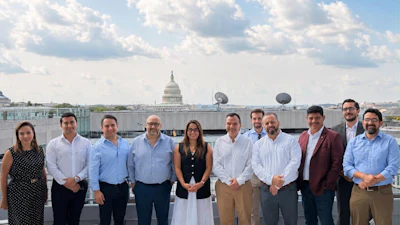
The U.S. Grains & BioProducts Council recently hosted a high-level delegation from Guatemala for a trade and learning mission to Washington, D.C. and Indiana. The visit aimed to strengthen bilateral cooperation and support Guatemala’s national E10 ethanol blending program.
Guatemala is preparing to become the first Central American country to implement an E10 gasoline blending program in more than 40 years, creating new long-term opportunities for U.S. ethanol exports.
“Guatemala is writing a new chapter for transportation fuels in Central America,” said Federico Salcedo, USGBC Latin America ethanol strategy lead. “This mission allowed policymakers to experience how ethanol supports energy security, cleaner transportation, rural prosperity and economic growth.”
The delegation included leaders from Guatemala’s Congress, officials from the Ministry of Energy and Mines and ethanol industry representatives. Salcedo and USGBC Ethanol Consultant Lady Gómez accompanied the mission, facilitating exchanges with U.S. government agencies, industry associations and private-sector leaders.
In Washington, D.C., the delegation met with stakeholders including the U.S. Department of Agriculture, the U.S. Department of Energy, the U.S. Environmental Protection Agency, the Renewable Fuels Association and Growth Energy. Discussions focused on ethanol policy, fuel quality standards, market oversight and consumer education.
In Indiana, the Indiana Corn Marketing Council coordinated visits across the ethanol value chain. Delegates toured POET’s Alexandria ethanol plant, observed storage and blending operations at a U.S. Energy terminal, met with Family Express to discuss retail fuel marketing and visited Chris Eck’s family farm in Boggstown.
“Continued public-private collaboration will expand opportunities for U.S. ethanol exports and help develop a more diversified and sustainable transportation fuel market in Central America,” Salcedo said.