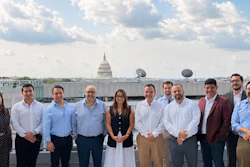
More than 140 wheat industry representatives from 14 countries gathered in late July for the 2026 Latin American & Caribbean Buyers Conference, an event designed to connect U.S. farmers with international customers.
The conference, organized by U.S. Wheat Associates (USW), brought together farmers, exporters, importers and millers. Among the attendees were 12 U.S. wheat farmers, including Mike McClellan, a Plainville farmer and Kansas wheat commissioner, and Aaron Harries, Kansas Wheat vice president of research and operations.
“The LABC offers a valuable opportunity to strengthen relationships, exchange ideas and explore emerging trends shaping the future of the wheat industry,” said USW President and CEO Mike Spier.
The first day covered supply and demand, price risk management, global trade flows and policy updates. A logistics panel addressed how U.S. wheat reaches markets through the Columbia River, Mississippi River and rail networks.
Harries joined representatives from North Dakota, Washington and Ohio to discuss five of the six U.S. wheat classes. He delivered sobering news about the hard red winter crop.
“Unfortunately, we had to share the news that the HRW crop was historically small this year due to extreme weather,” Harries said. “We reminded buyers that the U.S. has adequate supplies in storage to meet their needs.”
Day two focused on milling performance indicators, exporter insights and freight market outlooks.
USW has held the LABC every two or three years since 1994, rotating between the United States, Mexico, the Caribbean and South America. The conference has evolved from serving mainly government buyers to targeting private sector flour milling companies. Twenty-four South American milling companies attended this year’s event.
McClellan said face-to-face conversations with buyers proved essential.
“This conference was a great experience and gave me a better understanding of the customers who depend on our wheat,” McClellan said. “Building those relationships and hearing directly from buyers about what they value in U.S. HRW wheat reinforces the importance of producing a high-quality crop.”