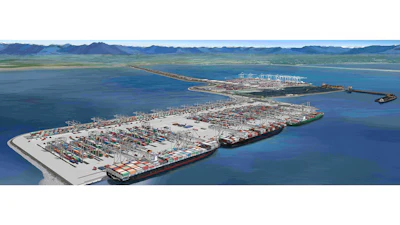
Canada has fast-tracked the C$5.9 billion Roberts Bank Terminal 2 project to open by 2035, four years ahead of schedule, which will increase Port of Vancouver's container capacity by 50 percent and reduce shipping costs by up to 25 percent.
- Roberts Bank Terminal 2 is designated a project of national interest, enabling faster federal approvals and a 2035 opening date instead of 2039
- The three-berth terminal will add 2.4 million containers of annual capacity, increasing the port's total capacity by approximately 50 percent
- The project is expected to reduce container import costs by up to 25 percent and cut delivery times between Vancouver and Toronto by about 17 percent
- Without new capacity, Canada faces C$800 million to C$900 million in added shipping costs annually beginning as early as 2031
- The final investment decision is targeted for mid-2027, with TerraMarine selected as the preferred construction partner
The Canadian government has listed the C$5.9 billion Roberts Bank Terminal 2 as a project of national interest, a step it says could bring the Port of Vancouver container terminal into commercial operation by 2035, four years ahead of the previous 2039 target.
Transport Canada announced the listing under the Building Canada Act, which gives listed projects upfront certainty on remaining federal approvals, according to the department's release. The three-berth terminal in Delta, British Columbia, would add 2.4 million containers of annual capacity, increasing the port's container capacity by about 50% and supporting about C$100 billion in trade a year. The Vancouver Fraser Port Authority is the project proponent, and the government said the project is on a viable path to a final investment decision by mid-2027.
The stakes are framed around cost. Without new capacity, the government said, Canadians could face C$800 million to C$900 million a year in added shipping costs beginning as early as 2031. Combined with investments in rail networks, logistics facilities and port modernization, the project could cut container import costs by up to 25% and reduce delivery times between Vancouver and Toronto by about 17%, according to the release.
Grain shippers have a stake in how that capacity is added. Roberts Bank Terminal 2 is one of four pillars of the Port of Vancouver Gateway Strategy, which Ottawa referred to its Major Projects Office in July. The port's 29 major marine terminals handle exports including grain, potash, petroleum products and canola oil, and dry and liquid bulk account for about 70% of port tonnage, according to the strategy. Other pillars cover land and infrastructure for bulk terminals and rail expansion.
Rail is the pinch point. Most cargo moving through the port travels by rail, and without targeted rail expansions the network will become congested and shipping costs will rise, the strategy said. The Major Projects Office and Transport Canada are developing a rail infrastructure strategy with the railways.
Transport Minister Steven MacKinnon said the terminal would ease bottlenecks at the country's largest port.
"Roberts Bank Terminal 2 will add much-needed capacity at our largest port, reduce bottlenecks and strengthen the transportation links Canadian businesses count on," MacKinnon said.
The port authority has selected TerraMarine as its preferred construction partner. Ottawa ties the project to its goal of doubling exports to markets outside the U.S. by 2035.
Project information is due on the Building Canada Act Project Registry within 30 days of the listing. The final investment decision, targeted for mid-2027, remains the next major step.