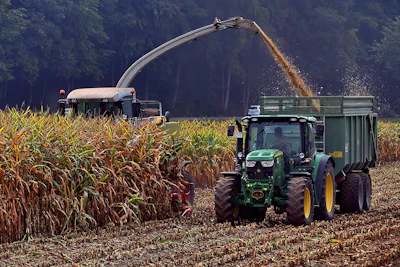
According to a new quarterly report from CoBank’s Knowledge Exchange, U.S. farmers are harvesting record-large corn and wheat crops this year, with soybean production also reaching its second-highest level in five years. While this abundance signals opportunity for grain elevators and futures markets, it also presents significant challenges for storage, transportation, and export demand.
The large grain harvest follows the biggest wheat crop in five years, creating pressure on U.S. storage and transportation infrastructure. Low water levels on the Mississippi River threaten to slow grain and oilseed exports during the peak shipping season, compounding logistical hurdles.
Corn and wheat sales remain historically strong entering the fourth quarter, but soybean sales have faltered due to a lack of Chinese purchases. Geopolitical uncertainty continues to cloud the demand outlook for U.S. grains.
Elevated crop input costs are further eroding profitability for farmers amid a low commodity price cycle. Tariffs on imported crop inputs have surged from 1% to nearly 12%, driving up prices for fertilizers and other essentials. Fertilizer costs remain the biggest headwind, prompting many producers to reduce fall applications and delay input purchases for 2026. A potential shift of fertilizer applications to spring raises concerns about supply chain disruptions during peak demand.
Biofuel markets offer some optimism for crop producers, though regulatory uncertainty casts a shadow. The Environmental Protection Agency is unlikely to finalize next year’s renewable volume obligations before 2026, delaying clarity for producers. Renewable diesel and biodiesel margins are expected to stay negative as the industry transitions from the Blenders Tax Credit to the 45Z Tax Credit. Ethanol producers, however, should see positive margins through year-end, supported by plentiful corn supplies and low natural gas prices.
Cotton prices remain depressed despite a smaller U.S. crop, weighed down by a slowing global economy and weak apparel sales. U.S. cotton exports are down 18% year-over-year, raising concerns since about 80% of the crop is typically exported. The USDA estimates the 2025/2026 cotton crop at 13.22 million bales, an 8% decline from last year.
Rice prices face similar pressures, with ample global supplies eroding U.S. export market share. Since India resumed rice exports in 2024, U.S. rice export sales have dropped 26% year-over-year. Increased competition from South America adds to the challenges, although stronger sales of medium-grain rice to Japan and Korea provide some relief. Despite U.S. tariffs on imported rice offering limited price support, global abundance keeps prices near multi-year lows.