The U.S. Department of Agriculture’s January 2026 World Agricultural Supply and Demand Estimates report reveals notable changes in the outlook for key crops including wheat, corn, rice and oilseeds for the 2025/26 marketing year. These shifts reflect evolving production conditions, consumption patterns and trade flows both domestically and internationally.
Wheat supplies rise despite lower domestic use
The USDA raised U.S. wheat beginning stocks by 4 million bushels following revised stock data, while reducing feed and residual use by 20 million bushels due to smaller-than-expected disappearance in the first quarter. Seed use also declined slightly. Exports remain steady at 900 million bushels, but ending stocks increased 25 million bushels to 926 million, an 8% rise from the previous year. The season-average farm price dropped 10 cents to $4.90 per bushel.
Globally, wheat supplies climbed 4.3 million tons, driven by record production in Argentina and higher yields in Russia. Argentina’s harvest is nearly complete, with output forecast at a record 27.5 million tons, almost 50% above last year. Russia’s production rose 2 million tons to 89.5 million. Consumption and trade also increased, with global ending stocks up 3.4 million tons to 278.3 million, largely due to Russia and Argentina.
Corn production and stocks reach record highs
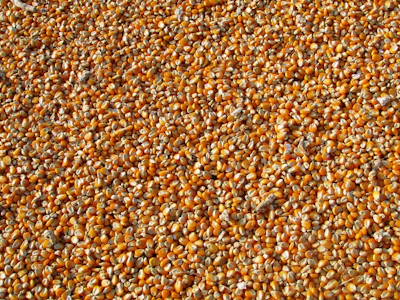
U.S. corn production is estimated at a record 17 billion bushels, up 269 million from last month, supported by a 0.5 bushel per acre yield increase and expanded harvested area. This surpasses the previous record set in 2023 by 1.7 billion bushels. Feed and residual use rose 100 million bushels to 6.2 billion, reflecting strong disappearance in the September-November quarter. Food, seed and industrial use fell slightly, mainly due to reduced use for sweeteners. Ending stocks climbed 198 million bushels to 2.2 billion. The season-average corn price rose 10 cents to $4.10 per bushel.
On the global stage, coarse grain production increased 14.8 million tons to 1.59 billion, with China’s corn production hitting a record 301.2 million tons. Foreign corn stocks rose, pushing global corn stocks up 11.8 million tons to nearly 291 million.
Rice supplies tighten amid lower imports and exports
U.S. rice supplies declined due to reduced imports and production. The Crop Production 2026 Summary estimated rice production at 206.7 million hundredweight (cwt), down 0.6 million from prior estimates, as lower harvested area offset higher yields. Imports fell by 1 million cwt, mainly in long-grain rice. Domestic use and residual increased 5 million cwt to a record 171 million cwt, while exports dropped 3 million cwt due to weak sales to Western Hemisphere markets. Ending stocks fell 3.6 million cwt to 49.3 million, down 9% from last year. The season-average farm price rose 20 cents to $11.80 per cwt.
Globally, rice supplies rose 1.7 million tons to 732.4 million, with higher beginning stocks and production in China and Japan. Consumption edged up slightly, and trade increased 0.3 million tons. Ending stocks rose 1.5 million tons, mainly in China, Japan, Bangladesh and Pakistan.
Oilseed production and stocks see modest gains
U.S. oilseed production increased 0.5 million tons to 126.2 million, led by higher soybean, canola and sunflowerseed crops. Soybean production rose slightly to 4.3 billion bushels, with harvested area up marginally. Soybean supply increased 17 million bushels on higher beginning stocks and production. Crush demand rose 15 million bushels to 2.57 billion, driven by stronger meal disappearance and exports. Soybean oil use for biofuel declined by 700 million pounds due to lower-than-expected demand and increased tallow use. Exports were lowered by 60 million bushels amid stronger Brazilian competition. Ending stocks rose 60 million bushels to 350 million. The season-average soybean price dropped 30 cents to $10.20 per bushel.
Globally, oilseed production rose 2.4 million tons, mainly from higher soybean crops in Brazil and the U.S., offset by declines in cottonseed and rapeseed. Brazil’s soybean production increased 3 million tons to 178 million, supported by favorable weather. Global soybean exports fell slightly, but ending stocks increased 2 million tons to 124.4 million, reflecting larger inventories in the U.S. and Brazil.