The U.S. soybean crush for marketing year 2025/26 was raised by 20 million bushels to 2.65 billion bushels, reflecting strong demand for soybean oil and meal. This increase offsets a reduction in soybean exports, leaving ending stocks unchanged at 340 million bushels. The June Oil Crops Outlook, released by the U.S. Department of Agriculture’s Economic Research Service, for the 2026/27 marketing year remains steady, with crush expected to reach 2.75 billion bushels, a 4 percent increase from the revised 2025/26 figure.
Planting progress ahead of average
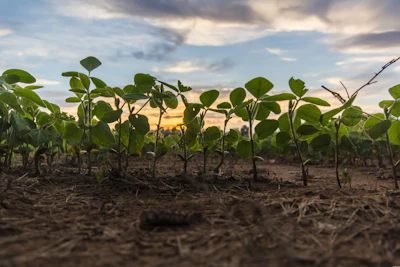
According to the USDA’s National Agricultural Statistics Service (NASS), 92 percent of the U.S. soybean crop had been planted by June 7, 2026, surpassing the five-year average of 88 percent. Dry conditions in May allowed farmers to plant earlier than usual, while rainfall in early June supported crop emergence, which is reported at 79 percent compared to the five-year average of 71 percent.
Despite the favorable planting pace, the overall condition of the soybean crop is rated 65 percent good to excellent, slightly below last year’s 68 percent. Drought conditions have increased, with 25 percent of the soybean crop currently affected, up from 13 percent at the same time last year.
Sunflowerseed planting is also progressing ahead of schedule, with 59 percent of acreage planted as of early June, six points above the five-year average. Peanut planting, however, is slightly behind pace, with 87 percent planted compared to 88 percent last year. The peanut crop is rated 62 percent good to excellent, with drought affecting 90 percent of production, a significant rise from 2 percent last year.
Strong crush margins support processing
Soybean processors continue to benefit from favorable crush margins. In Central Illinois, the average cash crush margin in April 2026 was $3.79 per bushel, a 12 percent increase from March and nearly double the margin from the previous year. Soybean oil prices in the region rose 9 percent in May, reaching 76 cents per pound, 56 percent higher than the same period last year.
The increase in crush has led to higher production of soybean meal and oil. Soybean meal exports are forecast at 20 million short tons for 2025/26, up from previous estimates, supported by strong commitments reported by the USDA Foreign Agricultural Service. Domestic demand for soybean meal is also higher, driven by feed applications.
Soybean oil use for biomass-based diesel production has increased as well, with 1.3 billion pounds used in March 2026 and a total of 6.1 billion pounds from October through March, an 8 percent rise from the previous year. This increase aligns with the U.S. Environmental Protection Agency’s Renewable Volume Obligations for 2026.
Canola crush and exports rise
The U.S. canola market shows similar strength. Canola exports through April 2026 totaled 714 million pounds, up 25 percent from the previous year. Meanwhile, imports declined to 507 million pounds. Canola crush for the marketing year 2025/26 is forecast higher, with processors crushing 4.4 billion pounds from June 2025 through April 2026, a 1 percent increase over last year. The final quarter crush is expected to be 1.2 billion pounds, 24 percent above the same period last year.