The National Agricultural Statistics Service (NASS) lowered its 2026 U.S. corn forecast to 15.9 billion bushels Tuesday, as an 8-bushel yield cut in Illinois and smaller losses across the eastern Corn Belt outweighed a sharp gain in Minnesota.
The November Crop Production report, based on conditions as of Nov. 1, puts the national corn yield at 179.6 bushels per acre, down 1.6 bushels from October and 6.9 bushels below the 2025 record of 186.5 bushels. Production would still rank second on record, behind last year's 16.96 billion bushels. Soybeans moved the other way, with a record 4.57 billion bushels on a record 53.3-bushel yield.
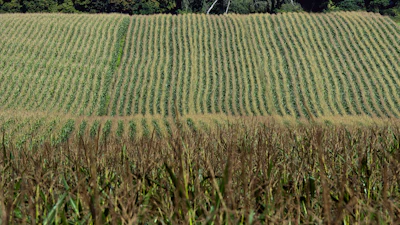
The state tables show where the corn bushels went. Illinois fell to 200 bushels per acre from 208 in October, putting its crop at 2.19 billion bushels. Indiana and Missouri each slipped five bushels, Michigan dropped 10 bushels and Nebraska lost four bushels. Minnesota climbed nine bushels to 204, and Iowa held at a record 219 bushels per acre for a 2.8 billion-bushel crop.
That shifts the regional supply picture for elevators and feed buyers. Nebraska's forecast of 1.77 billion bushels is down 12% from 2025, and South Dakota's 894 million bushels is down 18%. Kansas corn is forecast at 812 million bushels, down 13%, while Colorado's crop is down by about a third. Record corn yields are forecast in Arkansas, Iowa, Minnesota, Mississippi, Ohio, Tennessee and Virginia.
Sorghum took the steepest hit. NASS forecast production at 274 million bushels, down 6% from October and 37% from 2025, on a 52.4-bushel yield. In Kansas, the largest producer, the sorghum yield fell to 59 bushels from 65 in October, leaving a 145 million-bushel crop compared with 252 million bushels last year.
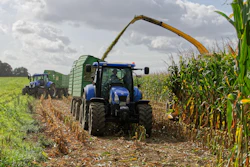
Much of the corn crop was still in the field as November began. As of Nov. 1, 74% of U.S. corn acreage was harvested, 3 percentage points behind the five-year average. Harvest ran more than 10 percentage points behind average in Iowa at 66%, South Dakota at 63% and Michigan at 43%. The report's weather summary said frequent rain slowed harvest in the upper Midwest, while delayed crop maturity in the eastern Corn Belt kept harvest behind pace. Soybean harvest was 88% complete, 4 percentage points ahead of average.
The numbers can still move. NASS said the corn and soybean forecasts rely on information collected before harvest was complete. Based on 20 years of results, NASS puts a 90% chance on final corn production landing between 15.5 billion and 16.3 billion bushels, and final soybean production between 4.43 billion and 4.71 billion bushels. The November corn forecast has come in above the final estimate 13 times in 20 years and below it seven times.
The same-day World Agricultural Supply and Demand Estimates carried the smaller corn crop into lower feed use, exports and ending stocks. NASS will publish end-of-season corn, soybean and sorghum estimates in its Crop Production annual summary in January.