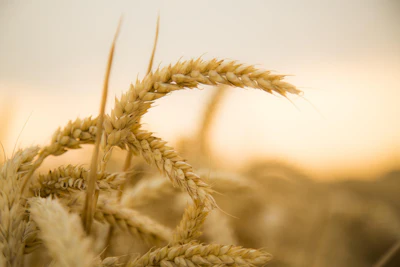
Canadian farmers grew 36.1 million metric tons of wheat in 2026, with the majority grading No. 1 or No. 2, Cereals Canada said in its annual New Wheat Crop Report.
The crop is 8% larger than the five-year average on above-average yields for both durum and non-durum wheat, the organization said. Its 2026 crop summary rates protein, milling and end-use performance as good across classes, though its tables show protein and falling numbers below 2025 levels for most composites.
Canada Western Red Spring, the class that accounts for 62% of Canada's wheat and averaged 20.6 million metric tons during the past five years, mostly graded No. 1 or No. 2. Wheat protein in the No. 1 Western Prairie composite was 13.3%, compared with 13.8% in 2025 and a five-year average of 13.9%. The composite's falling number was 306 seconds, down from 403 seconds a year earlier. The No. 2 Prairie composite came in at 277 seconds, down from 374 seconds.
The harvest was not easy. Cereals Canada said widespread rain in late August and early September delayed progress across many regions of Western Canada before drier weather returned in late September and early October. Falling number is a measure of sprout-related enzyme activity, and lower values indicate more of it.
For millers, the report's message is that the crop still performs. Flour from the red spring crop had good dough handling properties with reduced mixing times, and the class "remains a good choice as an improver wheat in blending situations," according to the summary.
Canada Western Amber Durum, which makes up 16% of Canadian wheat and averaged 5.4 million metric tons during the past five years, mostly graded No. 1, No. 2 or No. 3. Protein in the No. 1 composite fell to 13.2% from 14.2%, but semolina yield rose to 68.2% from 65.5% and the semolina speck count dropped to eight from 16. A medium-protein composite shipped by specification from Western Canada had 12.2% protein.
In Ontario, where Canada Eastern Soft Red Winter production totaled 2.8 million metric tons, 97% of the crop graded No. 2 or above. Protein averaged 9.2%, down from 9.5%, and mildew was the main reason for downgrades from No. 1 to No. 2. The composite's falling number of 352 seconds indicates no sprout damage concerns, the report said.
The Western results are based on more than 130 samples from nine grain exporters, with composites prepared from samples received up to Oct. 28. Grain Farmers of Ontario worked with 20 grain elevators across southern Ontario to collect 275 samples of the eastern class.
Cereals Canada will present the results to customers in two webinars: one Tuesday for Asia and the Middle East and one Wednesday for Europe and the Americas.