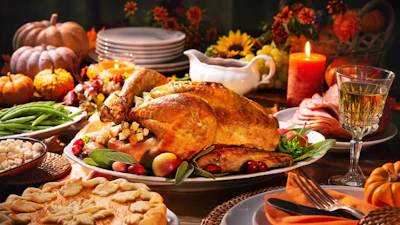
Thanksgiving dinner costs for 10 people increased 6% to $58.63 in 2025, with turkey prices jumping 10.1% due to higher production costs and tight inventory, marking the first overall increase since 2022.
- Classic Thanksgiving dinner for 10 people costs $58.63 in 2025, up 6% from the previous year
- Turkey prices led the increase at 10.1%, averaging $1.48 per pound for a 16-pound frozen bird
- Other items rising include cranberries (8.8%), whole milk (8.6%), and dinner rolls (7%)
- One-third of items declined, including frozen pie crusts, frozen peas, and whipping cream due to low wheat prices
- Regional costs ranged from $54.33 in the South to $61.57 in the Northeast
The cost of a classic Thanksgiving dinner for 10 rose more than 6% from 2025 to $58.63, or about $5.86 per person, according to the American Farm Bureau Federation's 41st annual Thanksgiving dinner cost survey, the first overall increase since the 2022 record.
The survey, released Wednesday, puts this year's meal $5.42, or 8.5%, below the record of $64.05 set in 2022. Volunteer shoppers in all 50 states and Puerto Rico checked prices during the first week of November. Adding boneless ham, russet potatoes and frozen green beans raises the total by $23.09, to $81.72.
Turkey carried the increase. A 16-pound frozen bird averaged $23.68, or $1.48 per pound, up 10.1% from a year ago. The federation tied the price to higher production costs and a recovering turkey population, and a Farm Bureau Intel analysis cited strong demand and tight inventories.
The rest of the basket split. Cranberries rose 8.8%, whole milk 8.6% and dinner rolls 7%, with the federation pointing to fuel costs for harvesting and transportation, demand for milk-based powdered protein and higher processing, packaging and transportation costs for rolls. A third of the items declined, including the vegetable tray, frozen pie crusts, frozen peas and whipping cream. Low wheat prices helped bring down the cost of some items that require flour, the federation said.
Faith Parum, deputy chief economist for the federation, said the increase reflects costs that build between the field and the grocery shelf.
"High diesel prices and a shortage of farm labor have taken a toll on the farm level of the food supply chain," Parum said.
Higher retail prices do not necessarily mean more money for farmers. The U.S. Department of Agriculture estimates that less than 6 cents of every food dollar goes back to the farm, according to the federation, and gains in farm revenue can be absorbed by higher costs for diesel, fertilizer and equipment.
Federation President Zippy Duvall used the results to press Congress on farm policy.
"Food prices are a real concern for America's families, including farm families, who pay the same grocery store prices and also face rising supply costs," Duvall said. He urged lawmakers to pass a farm bill and farm labor reform on a bipartisan basis.
Regional costs for the classic meal ranged from $54.33 in the South to $56.89 in the Midwest, $58.74 in the West and $61.57 in the Northeast. The informal survey's menu has not changed since 1986.