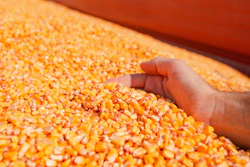
U.S. farmers had harvested 94% of the corn crop in the 18 major producing states as of Nov. 22, up 6 percentage points from a week earlier but slightly behind both last year's pace and the five-year average, according to USDA.
The department's National Agricultural Statistics Service released the figures Monday in its weekly Crop Progress report. Corn harvest stood at 88% on Nov. 15 and at 95% on the same date in 2025, and the 2021-2025 average is 96%. Sorghum was 86% harvested, compared with 90% a year ago and an average of 95%.
The remaining corn is concentrated in a handful of northern and eastern states. Michigan was 80% harvested, against an average of 87%, and Ohio was 85%, against 92%. South Dakota, at 87%, was 9 percentage points behind its average, while Iowa was 92% complete and Nebraska 91%, compared with averages of 98% and 96%. Illinois, at 98%, matched its average.
Field access was not the constraint in the week ended Nov. 22. Michigan reported 6.6 days suitable for fieldwork, Ohio 6.1 and Iowa 6.3. For elevators and processors in the lagging states, the gap points to corn receipts running later than usual.
Sorghum is further behind. Kansas was 79% harvested and Nebraska 76%, each against an average of 93%. Sunflower harvest reached 87%, compared with an average of 89%. Cotton harvest, at 84%, ran ahead of its 79% average, and peanut harvest, at 93%, matched its average.
Winter wheat planting for the 2027 crop was 95% complete in the 18 major states, compared with an average of 97%, and emergence was 87%, even with the average. USDA rated 54% of the crop good to excellent, up from 53% a week earlier and 48% a year ago. The share rated poor or very poor was 12%, down from 17% a year ago.
Ratings vary widely by state. Kansas was rated 60% good to excellent and Texas 53%, while Oklahoma was 39%. Washington was rated 35% good to excellent, with 54% of the crop in fair condition.
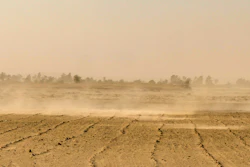
Moisture remains the open question going into winter. Topsoil moisture was rated short or very short across 35% of the 48 contiguous states' cropland, compared with 34% a week earlier and 38% a year ago. Shortages are pronounced in the Delta, where Louisiana was 90% short or very short, Arkansas 89% and Mississippi 85%. Indiana was 54% and Illinois 47%, while Iowa reported 3% short and none very short. Subsoil moisture was 39% short or very short nationally, compared with 42% a year ago.
The estimates are subject to revision the following week. The weekly survey draws on approximately 3,600 respondents and runs from early April through the end of November. NASS expects next week's report to carry corn, cotton, peanut, sorghum and sunflower harvest progress, along with winter wheat emergence and condition.