The U.S. Department of Agriculture (USDA) released the May World Agricultural Supply and Demand Estimates and its initial forecasts for the 2026/27 marketing year. The USDA is projecting substantial declines in wheat and corn production while forecasting higher soybean output.
Wheat production drops sharply
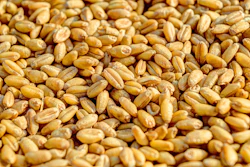
U.S. wheat production is projected at 1.561 billion bushels, down 424 million bushels from last year on reduced harvested area and lower yields. The all-wheat yield forecast of 47.5 bushels per acre represents a 5.8-bushel decline from last year’s record yield.
Winter wheat production faces the steepest decline, dropping 25% to 1.048 billion bushels, primarily driven by sharply reduced Hard Red Winter production. The forecast reflects challenging growing conditions across major wheat-producing regions.
Total domestic wheat use is projected lower on reduced feed and residual use, while food use remains unchanged at 960 million bushels. Wheat exports are forecast at 775 million bushels, down 135 million from revised 2025/26 exports due to reduced exportable supplies and higher U.S. prices.
The season-average farm price is projected at $6.50 per bushel, up $1.50 from last year on a lower stocks-to-use ratio and higher projected corn prices.
Corn outlook shows decline
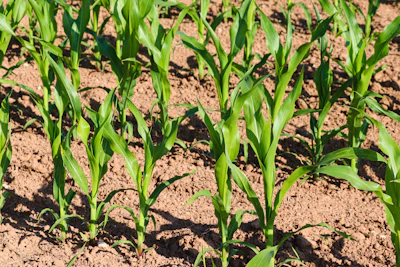
The corn crop is projected at 16.0 billion bushels, down 6% from a year ago on declines to both area and yield. Planted area of 95.3 million acres would be down 3.5 million acres if realized. The yield projection of 183.0 bushels per acre is based on weather-adjusted trends assuming normal planting progress and summer growing conditions.
Total corn use for 2026/27 is forecast to fall 2% from last year on reductions to domestic use and exports. Feed and residual use is projected down to 6.1 billion bushels on smaller supplies and higher prices, while food, seed and industrial use remains flat at 7.0 billion bushels.
U.S. corn exports are forecast to decline 5% to 3.2 billion bushels. Despite higher exports from competitor countries like Brazil and Ukraine, the U.S. remains the largest corn exporter by a wide margin.
The season-average farm price is projected at $4.40 per bushel, up 25 cents from last year.
Soybeans show growth potential
The soybean crop is projected at 4.435 billion bushels, up 173 million from last year’s crop, reflecting trend yield and higher harvested area. Total U.S. oilseed production is projected at 130.4 million tons, up 4.2 million tons.
U.S. soybean crush for 2026/27 is projected at 2.750 billion bushels, up 120 million from the 2025/26 forecast on favorable crush margins and strong demand for soybean oil as a biofuel feedstock.
Soybean oil demand is forecast to increase 7% in 2026/27, with higher domestic use partly offset by lower exports. Strong demand for soybean oil as biofuel feedstock, supported by EPA’s Renewable Volume Obligations for 2026 and 2027, lifts soybean oil use for biofuel to 17.8 billion pounds, up 3.6 billion from 2025/26.
U.S. soybean exports are projected to rise to 1.630 billion bushels, an increase over 2025/26 when tariff measures curtailed shipments to China. The season-average soybean price is forecast at $11.40 per bushel, compared with $10.40 in 2025/26.
Rice production declines
U.S. rice production is projected at 175.2 million cwt, down 15% from last year on lower harvested area. The projected yield of 7,732 pounds per acre is up 188 pounds from 2025/26, but cannot offset the acreage reduction.
Total rice exports are projected at 79.0 million cwt, down 2.0 million cwt from revised 2025/26 exports due to continued strong global competition and higher U.S. long-grain prices. The season-average farm price for all rice is projected at $13.50 per cwt, up from $12.10 in 2025/26.
The USDA cautioned that forecasts are highly tentative due to spring planting still underway in the Northern Hemisphere and several months away in the Southern Hemisphere.