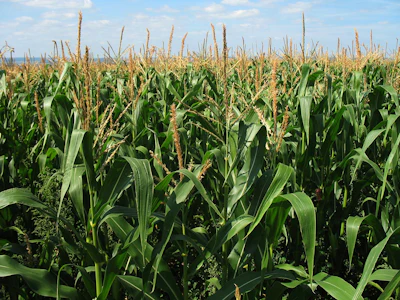
U.S. corn stocks as of March 1, 2026, climbed to 9.024 billion bushels, the highest on record and surpassing the previous peak set in 2017/18 by about 1 percent, according to the latest USDA Feed Outlook report. The majority of these stocks, 60 percent, are held on farms, reflecting robust supplies at the midpoint of the 2025/26 marketing year.
Despite the record inventory, corn disappearance in the second quarter (December through February) also set a new high at 4.288 billion bushels, outpacing the previous Q2 record from 2020/21. The USDA left its forecast for 2025/26 corn ending stocks unchanged at 2.127 billion bushels, which would be the largest since 2018/19. Corn exports in the second quarter reached 808 million bushels, up 16 percent from the same period last year, supporting a forecast for record-high annual exports of 3.3 billion bushels — 15 percent above 2024/25. Feed and residual use is also projected at a record 6.2 billion bushels.
Looking ahead, U.S. farmers intend to plant 3 percent fewer corn acres in 2026, with the Corn Belt seeing the largest declines. The projected season-average farm price for corn is up five cents to $4.15 per bushel, reflecting stronger cash prices in key producing states.
Sorghum stocks as of March 1 rose 15 percent year over year to 170 million bushels, with most held off-farm. However, planted area for 2026 is expected to fall 8 percent, mainly due to reductions in Kansas and Texas. Sorghum disappearance in the first half of the marketing year jumped 35 percent, driven by higher ethanol use and a 50 percent increase in exports, particularly to China.
Barley stocks declined to 93 million bushels, 10 million below last year, and are forecast to end the year at 64 million bushels, 7 percent below 2024/25. Oats stocks also slipped, with a slight decrease in planted area expected for 2026.
Globally, coarse grains production for 2025/26 is projected higher, led by a 3.2 million metric ton increase in India’s corn crop and gains in South Africa. These increases offset declines in Uruguay and the European Union. Global trade in coarse grains is also modestly higher, with India, Russia, Australia, and South Africa all raising export forecasts.