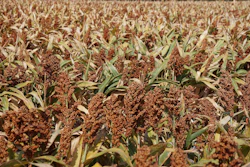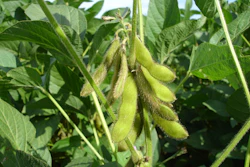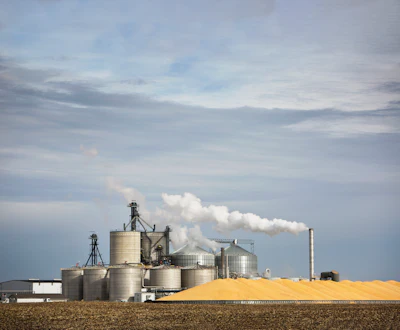
The biofuels industry that transformed American agriculture over the past two decades now faces a critical inflection point. While ethanol and renewable diesel created demand channels that lifted corn from $2 to $4 per bushel, today’s $4 corn no longer covers production costs as input expenses continue to soar. Fertilizer, labor and interest costs are sharply higher, while crop prices are significantly down from their 2021-22 peaks.
While ethanol, biodiesel and renewable diesel have built massive markets, many of the easy gains are behind them. The next phase of growth will depend less on technology breakthroughs and more on policy clarity, regulatory decisions and macroeconomic forces. For commercial grain handlers, processors and biofuel producers, the industry could be entering a period as pivotal as the implementation of the first Renewable Fuel Standard (RFS).
The tough economic backdrop
Biofuel market dynamics are being shaped by a macroeconomic environment defined by persistent inflation, high interest rates and historic levels of government debt.
Inflation has effectively shifted toward 3% as the new normal, as the Federal Reserve’s 2% target has gone unmet for nearly five years. That matters because grain and oilseed markets are highly sensitive to inflation expectations. When investors worry about inflation, money often flows into commodities. When recession fears dominate, money flows back out — sometimes quickly.
The national debt adds another layer of complexity. At $38.6 trillion and growing, debt servicing costs exceed $1 trillion annually — more than national defense spending. As more debt certificates (treasuries) must be sold to fund the deficit, basic supply and demand economics pushes the value of these certificates down, resulting in higher interest rates. This leaves less capital available for businesses to borrow for expansion and ultimately restricts overall economic growth.
Arlan Suderman, chief economist at StoneX, said President Trump’s use of uncertainty as a negotiation tactic is also holding the economy back. Leveraging his unpredictability against foreign opponents can produce quick trade deals, however, these wins carry unintended negative consequences for the U.S. economy. Businesses have developed expansion plans but hesitate to implement them and consumers hold back on spending due to this uncertainty, he said.
Price advantage erosion
For decades, U.S. agriculture relied on being the world’s low-cost producer, but that advantage is eroding. Rising input costs and currency dynamics mean the U.S. increasingly competes with South America and other regions on less favorable terms.
Nowhere is this more visible than in soybeans. In many market windows, Brazilian beans destined for Asia are cheaper than U.S. beans — sometimes by a wide margin. Even when diplomatic relationships improve, private buyers follow economics, not geopolitics.
That makes domestic demand development more critical than ever. If export growth cannot be taken for granted, the future of U.S. farm economics depends heavily on what happens at home — especially in biofuels.
The biofuels transformation — and plateau
In the early 2000s, less than 7% of the U.S. corn crop went to ethanol. Today, roughly one-third does. Soybean oil, once a relatively low-value byproduct, now drives crushing economics thanks to renewable diesel demand.
The industry also disproved early “food vs. fuel” fears. Ethanol growth did not starve the supply from livestock producers or food processors. Yield gains allowed multiple markets to grow at once, while distillers’ grains became a valuable feed ingredient.
Exports added another layer of strength, as ethanol shipments to Canada, the European Union and other markets continue to grow.
Yet the industry is now hitting a plateau. Without new demand channels, that plateau risks becoming a ceiling. Among domestic options, E15 remains the most immediate opportunity.
E15: Demand within reach
Domestically, E15 represents significant untapped potential for corn demand. Moving from today’s roughly 10% average ethanol blend toward full 15% adoption could add billions of bushels of corn demand over time. Even a modest shift upward would help balance supply and demand.
“Say we reached 11% blend instead of the 10.35%,” said Jacqui Fatka, lead economist for farm supply and biofuels at CoBank’s Knowledge Exchange Division. “That would create 240 million bushels of new demand.”
One major E15 win signals a shift in that direction. Last October, California — the world’s fourth largest economy — approved the sale of E15 at gas stations. Typically priced 30 to 40 cents below regular gasoline, E15 has mass appeal for drivers in the state that holds the most automobile registrations in the country.
However, E15’s limitation on sales from June 1st to September 15th is still pending Congressional authorization — after narrowly missing inclusion in late-2024 spending legislation. As of February 2025, year-round E15 sales are allowed only in Illinois, Iowa, Minnesota, Missouri, Nebraska, Ohio, South Dakota, and Wisconsin.
The EPA has also granted some state-level emergency waivers for year-round sales, creating a patchwork of operational complications. The American Petroleum Institute has even joined biofuel groups in supporting E15 to provide regulatory certainty for fuel suppliers and boost the farm economy.
Federal biofuel policy’s impact
The most significant federal policy driving biofuels demand is the Renewable Fuels Standard and its Renewable Volume Obligations (RVOs). RVOs determine how many gallons of renewable biofuel, like ethanol and biodiesel, must be blended into each year’s fuel supply.
In 2024, EPA issued proposed RVOs at 15 billion gallons for ethanol and 5.61 for biomass-based diesel fuel for 2026. The latest RVO proposal for 2026 would maintain relatively stable ethanol levels while increasing biomass-based diesel requirements to reflect expanded crushing capacity.
But uncertainty comes into play again here, as finalization of EPA’s 2026-2027 RVOs for oil refiners and fuel importers was significantly delayed until the first quarter of 2026. This delay created uncertainty in grain markets and contributed to weakness in soybean oil prices.
Some key questions that the final RVOs will clarify include:
- How volumes are adjusted when small refineries receive exemptions?
- Whether exempted volumes are reallocated to other obligated parties?
- How imported feedstocks are treated relative to domestic oils and fats?
Each of these decisions can shift billions of pounds of feedstock demand and move soybean and corn prices substantially.
Evolving biofuels credits landscape
A bright spot in the evolving biofuels landscape is the 45Z tax credit program, extended through 2029 in recent legislation. The latest structure ties incentives to carbon intensity rather than flat per-gallon payments. Biofuels facilities that invest in lower-carbon energy, renewable natural gas or carbon capture can earn substantially more than those that do not. Credits can often be sold, turning emissions reductions into a new revenue stream.
However, 45Z reduced the Sustainable Aviation Fuel tax credit from $1.75 per gallon to $1.00 per gallon, placing it on equal footing with road fuels. This no longer provides enough incentive for producers to switch from renewable diesel to SAF production, as SAF costs two to four times more to produce than conventional biofuels.
The convergence of macroeconomics, geopolitics and biofuel policy is creating a quickly shifting environment full of both risk and opportunity, depending on how clearly and consistently those forces are resolved. In the near term, expect final RVO decisions to provide clarity to key questions.
Looking ahead, question is whether history will remember this point as a new chapter of growth or a period of stagnation.