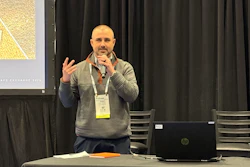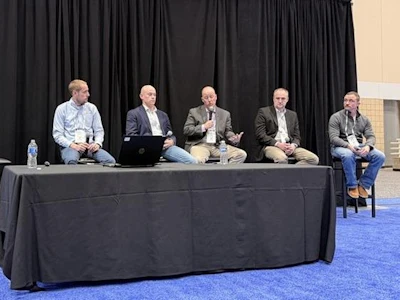
Grain elevator profitability depends on far more than market conditions — it hinges on how well operations and merchandising teams communicate with each other, according to a five-member industry panel at GEAPS Exchange in Kansas City. An Innovation Station brought together veterans from both sides of the elevator business to share strategies for bridging one of the industry's most persistent divides.
Shawn Talkington, regional manager for Kanza Cooperative, framed the challenge in financial terms from the outset.
"Merchandisers control the gross margin," he said. "Operations is responsible for net margin. The grain is never going to be worth more than what the merchandiser sells it — operations' job is to retain as much of that margin as possible."
Talkington pointed to grading accuracy, utility management, and grain conditioning as the primary areas where operations teams either protect or erode profitability.
When breakdowns occur — equipment failures, off-grade grain, capacity crunches — Adam Butler, director of northern grain operations for MKC, said the response starts with a phone call and a backup plan.
"We try not to say no," Butler explained. "We try to say we can't do this, but we can do this. You always have to have a secondary plan."
Cross-training emerged as one of the panel's strongest recommendations for preventing miscommunication before it starts. John Borchers, soybean product line manager for Producer Ag, described requiring new merchandisers to load a train car from start to finish during their first year on the job.
"It sets them up to understand what's going on in the elevator," he said.
He also challenges operations staff to step inside and learn the business side — understanding why grain is held for months and what happens to margin when it goes out of condition.
"If we give back 10 cents of it, we just did something for nothing for two months," Borchers said.
Adam Geers, VP of operations for Michigan Ag Commodities, echoed that approach, noting that on-site originators who understand facility layouts make better decisions.
"When we say something can or cannot happen, they have a feel for why," he said.
Geers also encouraged constructive friction between the two groups.
"If everyone agrees every day, where's the progress? That's how we grow," Geers said.
Troy Presley, merchandising consultant with Advanced Trading, tied the communication theme together with a straightforward principle.
"We have to always assume positive intent," he said. "Operations isn't out there to make merchandising look bad and vice versa. When stuff does change, at least try to get to those guys and let them know."
Presley also urged merchandisers to build flexibility into contracts where possible, giving operations teams room to blend and average grain rather than setting them up to fail.
The panelists agreed that real-world financial examples — grain settlement sheets, freight cost breakdowns, load-by-load discount data — are among the most effective tools for building operations teams' awareness of how their decisions affect the bottom line.
As Talkington put it, the settlement sheet is "basically a report card for your operations people."