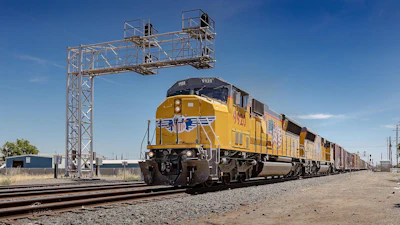
U.S. Class I railroads originated 26,826 grain carloads during the week ending June 6, a 15% decrease from the previous week, according to the Agriculture Department’s weekly grain transportation report.
Despite the weekly decline, rail grain shipments remained 11% higher than last year and 24% above the three-year average.
Barge movements also slowed, with 516,550 tons of grain transported during the week ending June 13. This represented a 23% drop from the previous week and a 30% decline from the same week last year. The number of barges moving down river fell to 330, down 116 from the previous week.
In the New Orleans region, 546 grain barges were unloaded, 13% fewer than the previous week.
Soybean export sales nearly doubled, rising 101% from the previous week to 430,000 metric tons for marketing year 2025/26. Corn export sales reached 1.16 million metric tons, up 16% from the previous week. Wheat export sales for marketing year 2026/27 totaled 400,000 metric tons.
Unshipped balances of corn and soybeans stood at 21.65 million metric tons, down 4% from the previous week but up 25% from the same time last year. Wheat’s unshipped balance reached 4.41 million metric tons, up 2% from the previous week but down 25% from last year.
Ocean freight rates from the U.S. Gulf to Japan held steady at $72 per metric ton, while rates from the Pacific Northwest to Japan decreased 1% to $37 per metric ton.
Twenty-seven oceangoing grain vessels loaded in the Gulf during the week ending June 11, 10% fewer than the same period last year. Another 26 vessels were expected to load within 10 days, 24% below last year’s level.
Average secondary railcar bids for shuttle service fell $104 from the previous week to $63 above tariff.