ADM is investing more than $60 million in upgrades at its Decatur West oilseed processing facility in Illinois, focusing on improving equipment reliability, safety systems, and operational efficiency at the company's largest single operating location.
- ADM is spending over $60 million on five projects at Decatur West, its largest single operating facility
- Projects include equipment upgrades, plant-wide process control system enhancements, and replacement of PFAS-containing firefighting foam
- The investment focuses on operational reliability, safety, and efficiency rather than new crush capacity
- Since 2020, ADM has invested an average of $200 million annually in Macon County operations, including $285 million in 2025
- Decatur is ADM's North American headquarters with approximately 4,000 employees in the region
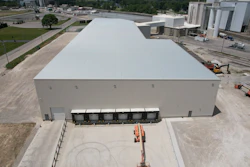
ADM will spend more than $60 million on five projects at its Decatur West oilseeds facility in Decatur, Illinois, upgrading processing equipment and controls at the company's largest single operating location.
The company announced the projects Monday in a news release. The work includes upgrades to key processing units, enhancements to plant-wide process control systems and replacement of firefighting foam that contains per- and polyfluoroalkyl substances, or PFAS. ADM did not break out costs for individual projects or give a construction timeline.
The release does not describe new crush capacity at Decatur West. The projects instead aim at the plant's operational reliability, safety and efficiency, according to ADM. That matters at a site of this size, where unplanned downtime can ripple into local soybean bids and into meal and oil supplies for feed and fuel customers.
Chris Cuddy, president of ADM's North America region, tied the spending to Decatur's location and logistics. "Decatur offers great people, a location in the heart of one of the world's most productive agricultural regions, access to customers, and transportation infrastructure that allows us to connect Illinois farmers and their crops with markets across the country and around the world," Cuddy said.
"Continued investment is essential to keeping our operations safe and competitive," Cuddy said.
The Decatur West work adds to earlier commitments in Macon County. In June, ADM announced plans to invest at least $103 million in modernization projects across its Decatur complex, supported by the state of Illinois' Economic Development for a Growing Economy program. EDGE, run by the Illinois Department of Commerce and Economic Opportunity, offers tax credits to businesses that create or retain full-time jobs and make capital investments in the state, according to the department's 2025 annual report on the program.
Since 2020, ADM has averaged almost $200 million a year in capital investment across its Macon County operations, including $285 million in 2025. Decatur is also ADM's North American headquarters. The company employs about 4,000 people in the region, and its footprint there includes what ADM calls the world's largest corn wet mill, oilseed processing, research facilities, a transportation complex and carbon capture and storage. ADM built its first Decatur plant in 1939.
ADM framed Decatur West as part of a wider round of North American upgrades. Those include enhancements expected to add 20 million bushels of annual corn processing in Columbus, Nebraska; upgrades to corn receiving in Clinton, Iowa; a capacity expansion at its natural colors plant in Boone County, Kentucky; higher throughput at its grain elevator in Optima, Oklahoma; and investments at several plants to raise North American crush capacity.
Several details remain open, including the cost of each Decatur West project, when the work will start and finish, and whether any of it falls under the EDGE-supported program announced in June.