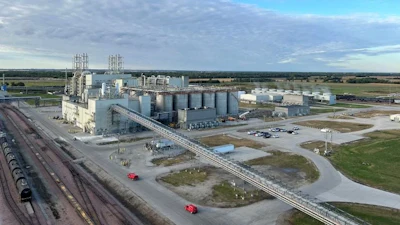
ADM is expanding its Columbus, Nebraska ethanol plant through two phases of investments to increase annual corn grinding by 20 million bushels by 2027, with the first phase already boosting production by 10 million bushels in 2026 and a second phase adding another 10 million bushels while improving fuel efficiency and reducing emissions.
- Capacity Increase: ADM's Columbus plant will process 20 million additional bushels of corn annually by 2027 through two investment phases
- Timeline: Phase one upgrades completed by 2026 add 10 million bushels; phase two investments beginning fall 2026 finish in 2027 for remaining 10 million bushels
- Sustainability Focus: Second phase includes technologies to improve yields and reduce natural gas use in dryers, cutting fuel costs and emissions
- Carbon Capture Integration: The facility already operates the world's largest bioethanol carbon capture system, with plans to generate over 800,000 tons of annual carbon removal credits
- Economic Impact: ADM operates eight production facilities in Nebraska and spent over $2.1 billion in 2025 purchasing crops and services from state farmers and vendors
ADM is making a series of investments at its corn dry mill in Columbus, Nebraska, that the company expects to increase the plant's annual corn grind by 20 million bushels compared with 2025, as demand for biofuels grows.
The company detailed the two-phase plan in a news release. The first phase is already done: equipment upgrades and modernization projects completed since 2025 have the plant running at higher production rates, and it is expected to process about 10 million more bushels of corn in 2026 than it did in 2025. A second round of investments begins this fall and is expected to be finished in 2027, adding another 10 million bushels of annual corn processing. ADM did not disclose the cost of either phase or the plant's current grind.
Nick Smith, ADM's president of North American Energy and Biofuels, tied the investment to federal biofuel policy.
"Strong Renewable Volume Obligations, durable tax policy and growing demand for lower-carbon fuels contribute to the confidence needed to support long-term investment decisions," Smith said.
Two phases of upgrades
The first round is already showing up in production. ADM said the higher operating rates from that work account for the roughly 10 million additional bushels expected this year.
The second round goes further into the process. ADM said it will add technologies designed to improve yields and to cut natural gas use per ton of dried distillers grains produced in the plant's dryers. Lower gas use per ton would reduce fuel costs and emissions tied to the plant's feed coproduct.
Smith said the Columbus work builds on earlier investments at the site.
"That's additional demand for American agriculture and a tangible example of how we're investing to connect farmers and their crops with growing markets," Smith said.
Building on carbon capture
The grind expansion arrives at a plant that already captures carbon dioxide. ADM and Tallgrass began carbon capture and storage operations at Columbus in November 2025. Carbon dioxide from ethanol fermentation moves on Tallgrass' Trailblazer pipeline, a former natural gas transmission line of about 400 miles, to the company's Eastern Wyoming Sequestration Hub for permanent underground storage. ADM describes Columbus as the largest bioethanol carbon capture facility in the world.
In September, ADM announced plans to enter the voluntary carbon market with more than 800,000 tons of annual carbon removal capacity at Columbus. Those credits are undergoing certification by Puro.earth, with initial issuance expected by the end of 2026 pending audit completion.
The two efforts overlap. More corn through the plant means more fermentation carbon dioxide flowing to the capture system, while the dryer upgrades target emissions on the coproduct side.
Part of a wider buildout
Columbus is the latest in a string of ADM upgrades across its North American footprint. The company listed upgrades to corn receiving infrastructure in Clinton, Iowa; higher throughput at its grain elevator in Optima, Oklahoma; investments at multiple facilities to increase North American crush capacity; and a capacity expansion at its natural colors plant in Boone County, Kentucky.
For Nebraska corn growers, the added grind is a local demand story. ADM has more than 650 employees in the state, with eight production facilities, nine crop procurement locations and three warehouses. The company said it spent more than $2.1 billion in 2025 buying crops and other goods and services from Nebraska farmers and vendors.
ADM did not give a specific completion date for the second phase beyond 2027, and the added 20 million bushels remain a company projection. The release did not say how much additional ethanol or distillers grains the higher grind will produce.