The Federal Railroad Administration awarded more than $400 million to short-line railroads handling grain through its CRISI grant program, supporting 105 projects across 45 states that will improve over 2,000 miles of track and enable heavier grain car capacity.
- FRA awarded over $400 million to grain short-line railroads through CRISI grants as part of a $2.34 billion total award round
- The grants support 105 projects in 45 states and will improve more than 2,000 miles of track
- Major focus on track rehabilitation to accommodate 286,000-pound capacity railcars, allowing grain shippers to load more per car
- Notable awards include $22 million to Twin Cities & Western Railroad for 200 new grain cars and Minnesota track upgrades, and $23.6 million to Red River Valley & Western Railroad for 26 miles of rail replacement in North Dakota
- Projects aim to improve grain handling capacity, support rural economies, and strengthen domestic energy supply chains
The Federal Railroad Administration awarded more than $400 million to short-line railroads that handle grain as part of its latest round of Consolidated Rail Infrastructure and Safety Improvements, or CRISI, grants, according to USDA's Grain Transportation Report.
The U.S. Department of Transportation announced the round Monday, saying it would support 105 projects in 45 states and improve more than 2,000 miles of track. FRA's project summaries put the total awarded at about $2.34 billion.
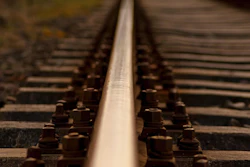
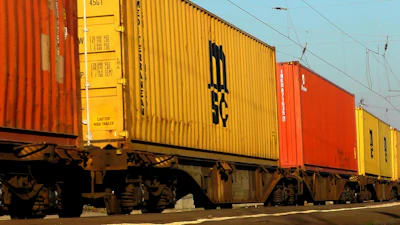
Much of the grain money targets car weight. Agriculture-focused projects in Delaware, Idaho, Illinois, Indiana, Michigan and Washington will collectively receive about $100 million to rehabilitate track so it can handle railcars with 286,000-pound capacity. Track that cannot carry those cars limits how much grain shippers on a branch line can load per car.
Twin Cities & Western Railroad was selected for up to $22 million for construction under a project it calls Strategic Transportation Revival through Onshoring and National Growth. The railroad will buy 200 new grain cars, upgrade short-line track in central Minnesota and replace turnouts and switches to accommodate the heavier cars. It will contribute a 20% nonfederal cost share, and the project qualifies for the program's rural set-aside.
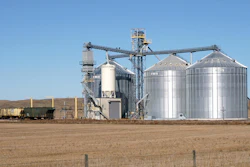
In North Dakota, Bottineau County was selected for up to $690,825 to advance a new rail-served grain facility outside the city of Bottineau. FRA said the project would move railroad operations away from a school zone, improve grain handling capacity and support the domestic energy supply chain. The county will cover a 50% nonfederal share, which may include money from Border Ag & Energy.
The same round sent $23.6 million to the Red River Valley & Western Railroad to replace about 26 miles of rail and build a new siding near Wahpeton, North Dakota, according to Sen. John Hoeven, R-N.D.
USDA said CRISI awards also support general freight-rail improvements that benefit grain shippers beyond the projects aimed directly at agriculture.
The Bottineau award covers project development and final design, not construction, so the elevator itself would need further funding to be built. FRA's summaries did not give construction timelines for any of the grain-related projects.