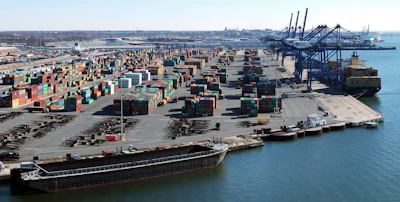
The Moore-Miller administration announced the opening of a grain transloading facility at the Helen Delich Bentley Port of Baltimore, creating a streamlined export path for Maryland farmers sending crops to Europe, Asia and South America.
The facility at the Seagirt container terminal, operated through a partnership between Ports America Chesapeake and Frey Commodities, features three grain silos with a combined 60,000-bushel capacity and can load more than 200 containers per week.
“The Port of Baltimore remains the economic engine of our state, connecting Maryland’s economy to markets around the globe,” Gov. Moore said. “This new shipping facility is an exciting opportunity for Maryland farmers and agricultural partners to expand their reach and further solidifies our state’s importance in the global supply chain.”
Before this facility opened, no direct transloading operation existed at the Port of Baltimore for grain exports. Farmers had to load their products into empty shipping containers at offsite locations, which were then transported to the port.
Now, farm trucks can drive directly into the Seagirt terminal and deposit grain onto a conveyor system that moves it into silos. Ports America Chesapeake removes the grain when ships are ready and loads it into export containers.
The new process eliminates offsite loading and extra truck transfers, reducing emissions and transportation costs while cutting down truck miles traveled.
Maryland Secretary of Agriculture Kevin Atticks said the facility marks “an exciting step forward in connecting Maryland agriculture to markets around the world” by reducing transportation and handling costs.
The facility supports inbound shipments from both truck and rail, with short line rail access to CSX and Norfolk Southern providing Midwest producers a more direct export route through Baltimore.
A groundbreaking for the facility was held on April 9, 2026.
“This project is a major win for grain producers in Maryland, Delaware and Pennsylvania by providing a more efficient supply-chain model that connects them to growing overseas demand,” said Mike Adamchak, chief commercial officer at Frey.
Mark Schmidt, president of Ports America Chesapeake, said the partnership “creates a more efficient, streamlined supply chain for farmers while strengthening the region’s competitive position.”
The Port of Baltimore ranked 10th among U.S. ports for foreign cargo value and 11th for total tonnage in 2025. It generates more than 20,300 direct jobs, with nearly 273,000 jobs in Maryland connected to port operations.
Last year, Baltimore handled approximately 50 million tons of cargo, its second-best year ever. The port set new records for shipping containers through Seagirt and ship calls into its terminals. Baltimore handled more farm and construction equipment and imported forest products than any other U.S. port.
Ports America Chesapeake operates the Seagirt container terminal under a public-private partnership agreement with the Maryland Port Administration and will run the facility exclusively for Frey Commodities for export operations.