.jpg?auto=format%2Ccompress&crop=faces&fit=crop&h=48&q=70&w=48)
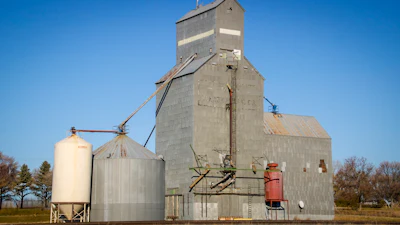
I live in Arizona now, but when I returned home to Wisconsin this summer I realized there was something serene about driving around the Midwest. As I drove along country roads cutting through green fields, the towering silhouettes of grain elevators and feed mills rose from the horizon, a reminder of the amount of work it takes to keep our country fed.
Due to professional curiosity, I love looking at new facilities and witnessing how large and advanced even farm storage has become. But I've always been most fascinated by the older sites — the ones who have seen decades of wear and tear. Once the economic and social hubs of rural communities, these structures stand as monuments to America’s farming heritage.
Yet, too often, these iconic buildings sit abandoned, their weathered exteriors crumbling, windows broken and potential wasted. Each time I pass a dilapidated elevator, I can’t help but feel a pang of loss — not just for the structure itself, but for the piece of community history fading away with it.
New life for old elevators
This is why stories like the one Anna Ballweber reported on for Valley News Live on Scott Dahms in Baker, Minnesota, fill me with hope that these buildings won't be left to rot. In 2017, Dahms spotted an abandoned grain elevator on Craigslist and recognized its potential where others saw only obsolescence. For just $15,000, a fraction of the original asking price of $80,000, Dahms purchased this towering piece of rural history and began transforming it.
What makes Dahms’ project particularly fascinating is its evolution. Initially converted into a living space where Dahms resided, the elevator now serves as an Airbnb that can accommodate more than 20 guests, with unique features throughout the repurposed space. But his vision doesn’t stop there.
In a move that perfectly illustrates how historic structures can find new relevance in changing times, Dahms is now working to convert part of the elevator into a cannabis dispensary and growing facility. After receiving preliminary approval from Minnesota in July 2025, he recently cleared another hurdle when Clay County commissioners approved a zoning ordinance change on October 7, allowing his agricultural service zone to potentially host this new business.
“We can create a whole new industry in a way to save these elevators,” Dahms explained. “Nobody is building another one, they’re just kind of burning down. They’re just such iconic structures.”
Revitalizing rural communities
The significance of projects like Dahms’ extends far beyond preserving architecture. When interstate highways redirected traffic away from small towns, many rural communities began a slow decline. “Once the interstate system came through, it started killing a lot of these towns because no one went through them anymore. We’re hoping to bring some of that back,” Dahms noted.
This revitalization effort could bring multiple benefits to Baker, an unincorporated community nestled between Sabin and Barnesville. The dispensary would create new jobs in an area with limited employment opportunities. Dahms also plans to reinvest in the community by donating a portion of the dispensary’s profits back to Baker.
A national trend with local impact
Baker’s grain elevator is just one example of a growing movement to repurpose these agricultural landmarks. Across America, creative entrepreneurs and communities are finding new uses for these structures:
- Historic mills transformed into restaurants and breweries
- Grain silos converted into climbing gyms
- Elevators repurposed as museums celebrating agricultural heritage
- Former feed mills reborn as art galleries and community spaces
- Grain facilities reimagined as unique residential living spaces
What makes these conversions so powerful is how they maintain a physical connection to a community’s agricultural roots while creating new economic and cultural value. The massive concrete or wooden structures built to last a century for grain storage can serve another century as gathering places, businesses or homes.
Challenges and opportunities
Repurposing grain elevators is not without challenges. Zoning issues, like those Dahms is navigating, can be complex. The structures themselves present unique renovation challenges, from their vertical orientation to concerns about former chemical use. Financing such unconventional projects often requires creative solutions beyond traditional lending.
Yet the potential rewards, both cultural and economic, make these efforts worthwhile. In many rural communities, these towering structures remain the tallest buildings for miles around, literal landmarks that define a town’s identity and skyline. Preserving them maintains a visual connection to heritage that would otherwise be lost.
As Dahms works toward his target opening date of April 20, 2026, his story reminds us that with vision and community support, the architectural landmarks of our agricultural past can find new purpose. Rather than allowing these monuments to our farming heritage to crumble or be demolished, we can reimagine them as anchors for rural revitalization, honoring their history while building a sustainable future for the communities they once served.
In the silos and elevators that dot our rural landscape, we find not just nostalgia, but opportunity. Their preservation isn’t merely about saving buildings — it’s about saving the once beating heart of rural America.
Examples of repurposed grain elevators and feed mills
- Greenfield, Indiana - The Depot: A grain elevator built in 1906 was converted into a full-service family restaurant with bars and event space. The renovation preserved many original architectural elements including hand-hewn beams, wood planking, and material handling conveyors.
- Fairmount, Indiana - Grains and Grill/Bad Dad Brewery: A former John Deere farm implement dealership was transformed into a restaurant and brewery. The business has become a popular destination with the brewery now distributing to over 400 locations across Indiana.
- Minneapolis, Minnesota - Mill City Museum: The historic mill ruins, grain elevator and grain silos in the St. Anthony Falls Historic District were preserved and converted into a museum that showcases the city's flour milling history.
- Minneapolis, Minnesota - Calhoun Isles Condominiums: In the 1980s, the Layhart Grain Elevators were converted into residential condominiums at 3141 Dean Court, creating unique cylindrical living spaces.
- Bloomington, Illinois - Upper Limits Climbing Gym: An abandoned grain elevator was transformed into a climbing facility featuring indoor climbing in 65-foot silos and outdoor climbing on a 110-foot silo.
- Cape Town, South Africa - The Silo Hotel and Zeitz Museum: A grain elevator that operated for nearly 80 years was converted into a six-story luxury hotel sitting above the Zeitz Museum of Contemporary Art Africa.
- Copenhagen, Denmark - Residential Apartments: A grain silo in Copenhagen's North Harbor was transformed into unique residential apartments ranging from 1,141 to 4,316 square feet, preserving much of the industrial character.
- Buffalo, New York - Silo City: Several grain elevators along the Buffalo River have been repurposed for arts and cultural events, with some containing performance spaces, art installations and a whiskey distillery.
- Akron, Ohio - Quaker Square Inn: The former Quaker Oats silos were converted into a hotel with circular rooms, though it later became student housing for the University of Akron.
- Omaha, Nebraska - Grain Silo Climbing Gym: An abandoned grain elevator was transformed into an indoor climbing facility with routes set on the interior walls of the silos.
- Milwaukee, Wisconsin - Brewhouse Inn & Suites: Part of the historic Pabst Brewery complex, this former grain storage and brewing facility was converted into a boutique hotel.
- Leesburg, Indiana - HopeLore Brewing Co.: Located inside the historic, renovated Old Leesburg Mill, this brewery has earned awards for its craft beers while preserving the rustic wooden interior of the green mill.
- Sacramento, California - The Mill at Broadway: A former flour mill was transformed into a mixed-use development featuring residential units, retail spaces and community areas.
- St. Louis, Missouri - City Museum: While not strictly a grain elevator, this former shoe factory and warehouse incorporated salvaged materials from grain silos and other industrial structures into its unique design.