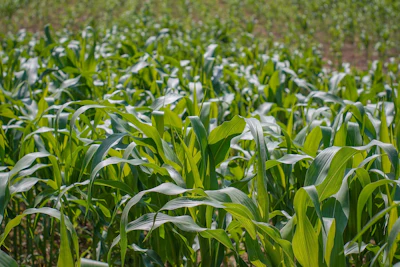
America’s corn farmers are confronting what may be the most challenging period in the industry’s 250-year history, with rising costs and four consecutive years of losses threatening the future of family farming operations across the country.
A new survey of 1,000 corn growers by the National Corn Growers Association reveals that 79% believe the next generation will not be able to succeed on their farms without support from current operators who are already struggling financially. The findings point to a troubling outlook for an industry that has been the backbone of rural America since the nation’s founding.
Financial pressures force major changes
The economic strain is forcing farmers to make difficult decisions about their operations. According to the survey, 61% of farmers plan to delay capital purchases in 2026, while 36% will reduce fertilizer use and 33% will cut other inputs. Nearly three-quarters of surveyed farmers are making at least one of these cost-cutting changes this year.
“Corn growers are striving to support their families and businesses on farms that often require millions of dollars to enter and substantial ongoing cash flow to operate,” the NCGA report states. Cash flow pressures are forcing more farm households to rely on off-farm work, with 96% of farm families already depending on outside income for 80% of their total household earnings.
Industry consolidation drives up costs
The challenge extends beyond individual farm finances to widespread industry consolidation that has reduced competition across key agricultural sectors. The combined market share of the four largest corn seed companies rose from 59.7% in 1973 to 83.4% by 2018-20, with the top two firms now controlling 71.6% of the U.S. corn seed market.
This consolidation has contributed to rapidly rising input costs. Using a three-year rolling average, the cost of seed to plant an acre of corn increased 660% between 1990 and 2025, more than double the 302% increase in total per-acre production costs.
Farm numbers continue declining
The financial pressures are accelerating a long-term trend of farm consolidation. The number of U.S. farms has declined from 6.8 million in 1935 to 1.87 million in 2025, with farms disappearing at an average annual rate of 1.16% since 1960. At the current pace of decline, the U.S. would have fewer than 1.5 million farms within twenty years.
The survey reveals uncertainty about generational succession, with 57% of farmers having an unclear outlook for who will operate their farms in the future.