Euro-area food inflation is set to climb again through 2027 as higher energy and fertilizer costs and this summer's drought move through supply chains, four European Central Bank economists wrote in a blog post published Tuesday.
In "Has food inflation lost its bite?", Elena Bobeica, Gerrit Koester, Friderike Kuik and Christiane Nickel said food inflation fell from 2.6% in January to 1.1% in August, its lowest level since mid-2021, before edging up to 1.3% in September. Headline inflation rose from 1.7% to 3.8% during the same period, pushed by consumer energy inflation of 18.9% after the start of the conflict in the Middle East. The ECB's September staff projections show food inflation reaching 3.4% in the third quarter of 2027 before easing.
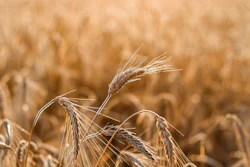
The recent lull reflects last year's conditions. European farm yields were generally good in 2025, with above-average cereal and oilseed harvests, and world prices for coffee, tea, cocoa and sugar fell from earlier highs. Both lowered euro-area farm-gate prices.
The energy shock works more slowly. Energy costs spread through transportation, fertilizer, packaging and processing, and the authors said those indirect effects can take several months to reach consumer prices. Fertilizer producer prices have surged since the blockade of the Strait of Hormuz, and unlike in 2022, the increase reflects supply disruption as well as higher energy costs.
The effects will not land evenly. The authors expect the strongest impact on products tied to energy-intensive farming, including wheat, corn and barley and downstream bread, pasta and bakery goods. Transmission then extends to animal feed, with higher grain prices eventually feeding into dairy and meat prices.
Weather is the second driver. Extremely dry, persistently hot conditions across much of Europe in 2026 worsened agricultural supply prospects, and ECB staff estimate an effect of 0.3 to 0.8 percentage points on euro-area food inflation during the next year. Unprocessed food inflation rose to 4% in September on weather-sensitive vegetable prices, while processed food inflation slipped to 0.4%.
Several factors could soften the rebound. The EU relies on imports for about 30% of its nitrogen fertilizers and 70% of its phosphate fertilizers, but in July it approved temporary aid covering up to 80% of farmers' added fertilizer costs. Western Europe took the worst of the drought, while conditions in eastern Europe were mixed. The authors expect the peak in food inflation to be roughly one-fifth of the one that followed Russia's invasion of Ukraine.
Uncertainty remains. New machine-learning models that factor in weather predict a more delayed response, while other short-term models point to a steeper rise than the ECB projections. All of the models expect food inflation to increase during 2027. The blog reflects the authors' views and not necessarily those of the ECB.