The USDA forecasts food prices will rise 2.8% in 2026 and slow to just 1.7% in 2027, with grocery prices and falling egg costs driving most of the slowdown as avian flu impacts ease and dairy production increases.
- Food-at-home prices expected to rise 2.3% in 2026 and 1% in 2027, below the 2.6% annual average from 2006-2025
- Egg prices forecast to fall 29.3% in 2026 as production recovers from avian influenza outbreak
- Beef prices rising 8.7% in 2026 due to lower production levels, while pork and poultry increase modestly at 1-1.2%
- Farm-level wheat prices up 49.8% year-over-year in September, forecast to rise 22.6% in 2026 due to declining U.S. output
- Producer price indexes typically lead consumer prices, serving as early signals for future grocery inflation trends
U.S. food prices are forecast to rise 2.8% in 2026 and 1.7% in 2027, according to the October Food Price Outlook that USDA's Economic Research Service released Friday, with grocery prices driving most of the slowdown.
The forecast incorporates September consumer price index and producer price index data. Food-at-home prices are forecast to rise 2.3% in 2026 and 1% in 2027, below their 2.6% annual average from 2006 to 2025. Food-away-from-home prices are forecast to rise 3.5% in 2026 and 2.8% in 2027. The 2027 numbers carry wide ranges: ERS puts its all-food forecast interval for next year at minus 2.5% to 6.2%.
Monthly movement was modest. The consumer price index for all food rose 0.1% from August to September and was 2.5% higher than a year earlier, while the all-items index was up 3.7%.
Protein is where the split shows. Beef and veal prices are forecast to rise 8.7% in 2026, with federally inspected beef production below year-ago levels in most months and expected to stay there through year-end. Retail beef and veal prices fell 1.3% from August to September but were still 3.5% above September 2025. Pork prices are forecast to rise 1% and poultry prices 1.2%.
Eggs and dairy are moving the other way. Egg prices are forecast to fall 29.3% in 2026 as production recovers from the highly pathogenic avian influenza outbreak that began in 2022. Retail dairy prices are forecast to slip 0.4% as a larger herd and higher output per cow push milk production up.
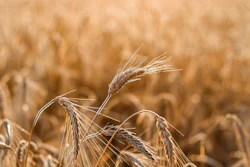
The farm-gate numbers are more volatile. Farm-level wheat prices were 49.8% higher in September than a year earlier and are forecast to rise 22.6% in 2026, reflecting a large projected decline in U.S. wheat output. Farm-level cattle prices have fallen four straight months, down 4.4% from August and 7.6% from a year earlier, yet ERS still forecasts a 5.8% increase for the year. Farm-level milk prices are forecast to fall 10.5% and farm-level egg prices 81.2%.
Those producer prices matter for what comes next. ERS said producer price indexes typically lead consumer prices because food passes through several processing stages, making them an early signal for grocery inflation. The agency does not forecast producer price indexes for unprocessed and processed foods and feeds, though it said those indexes have historically tracked closely with the food consumer price indexes.
The forecasts come from statistical models fitted to recent price trends, and ERS updates them monthly as new consumer and producer price data are released.