The agricultural sector faced significant challenges, marked by record-breaking heatwaves, widespread drought and critically low snowpack across much of the United States, according to a USDA National Agricultural Statistics Service's weekly State Stories report.
Western states including California and Nevada experienced temperatures 15 to 30 degrees above seasonal averages, while Iowa recorded its earliest 90-degree day on March 21. The Southeast also saw above-normal temperatures, with Georgia and Alabama reporting highs up to 10 degrees above average.
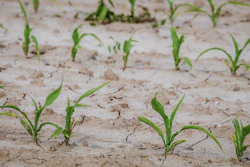
Drought conditions worsened across the Southwest, Plains and Southeast. Oklahoma reported 94% of its land in moderate to exceptional drought, while Arkansas faced historically low pond levels and burn bans in 55 of 75 counties. Florida saw 73% of the state in extreme drought, with 10% classified as exceptional.
Water supply concerns are mounting in the West, where snowpack levels are far below median averages. Colorado’s snowpack stood at just 24% of normal, with some areas as low as 9%. Utah’s snowpack was 21% of median, raising fears that irrigation water may be insufficient for the growing season.
Crop conditions varied widely. California reported 70% of its winter wheat in excellent condition, but drought and wind damage left 50% of Colorado’s and 51% of Nebraska’s winter wheat rated poor or very poor. Warm temperatures accelerated crop development, with 23% of Kansas wheat already jointed.
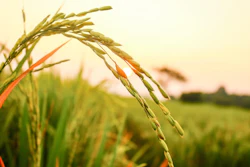
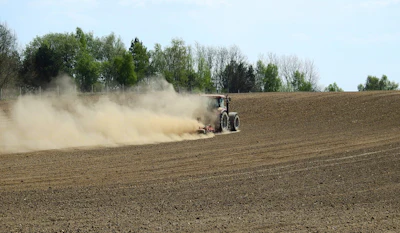
Planting began early in some regions but was slowed by dry soils in others. Corn planting is underway in Alabama, Florida, Georgia, Kansas, Mississippi, Missouri, and Texas, though moisture deficits delayed progress in parts of Alabama and Florida. Cotton planting in Arizona exceeded the five-year average, while Texas and Georgia prepared for planting. Rice planting started in Arkansas, Missouri, and Texas, with Florida’s Palm Beach County reaching 50% completion despite low market prices.
Livestock producers are coping with forage shortages and dry pastures, relying on supplemental feeding in Alabama, Florida, Georgia, Montana, and Texas. Water hauling has become necessary in Wyoming due to extreme dryness. Seasonal health issues such as dust pneumonia and bovine trichomoniasis were reported in Colorado, Arizona, and Minnesota.
Despite these challenges, calving and lambing are progressing well, often ahead of schedule due to mild weather.
The report is based on observations from approximately 4,000 agricultural professionals and farmers collected between December 2025 and March 2026, with weather data from NOAA.