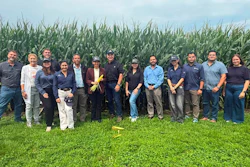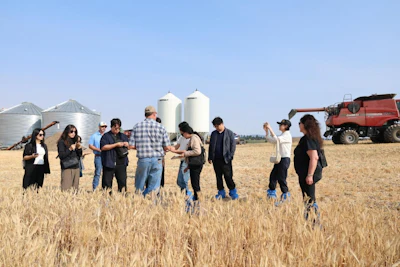
The U.S. Grains & BioProducts Council (USGBC) recently led a team of South Korean food barley buyers through North Dakota, Idaho and Washington to connect them with U.S. barley growers and exporters.
The timing matters. Tariff-rate quota provisions for U.S. barley under the Korea-U.S. Free Trade Agreement will expire at the start of next year. After that, U.S. barley will enter South Korea duty-free without government quota allocation procedures.
“At that time, U.S. barley will be able to enter South Korea duty-free without government quota allocation procedures, creating new opportunities for Korean importers to expand purchases of U.S. barley,” said Haksoo Kim, USGBC director in South Korea.
Korea consumes approximately 180,000 metric tons (8.3 million bushels) of barley annually, primarily for food processing and as a rice substitute. Domestic production fluctuates significantly due to weather conditions and disease concerns, making Korea a consistent importer of barley.
The delegation started in Fargo with presentations from Steven Edwardson and Greg Kessel of the North Dakota Barley Council, followed by a tour of Valley Grain Milling’s facilities.
In Idaho, the Idaho Barley Commission guided visits to Josh Jones Farms and Clearwater Farms to observe barley harvesting. The group toured McKay Seed Company to discuss barley varieties and purchasing, then visited Lewiston Inland Seaport and a grain handling facility to see U.S. safety standards in the export chain.
The trip concluded with meetings at Idaho Barley Commission, Inland Empire Milling and United Grain Corporation to build future business partnerships.