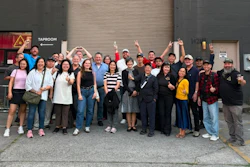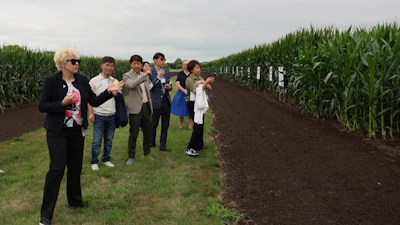
The U.S. Grains & BioProducts Council recently hosted South Korean biotechnology safety reviewers on a tour of American regulatory agencies and biotech companies to help participants better understand how the U.S. evaluates gene-editing technologies in agriculture.
“Participants were eager to examine the full lifecycle of gene-edited crop development, including research and development, safety assessment, regulatory approval, commercialization and stewardship practices,” said Haksoo Kim, USGBC director in South Korea.
The delegation started in Washington, D.C., meeting with the U.S. Department of Agriculture, Food and Drug Administration and Environmental Protection Agency to learn about safety protocols throughout the agricultural system.
From there, the group traveled to Raleigh, N.C., touring Pairwise, a gene-editing company, to see lab and greenhouse operations and learn how biotechnology improves agricultural productivity.
The delegation also visited Bayer in Missouri and Corteva in Iowa to discuss advances in plant breeding and the quality and sustainability benefits of gene editing.
“Biotechnology is advancing rapidly, especially with new gene-editing technologies,” Kim said. “South Korea is now looking at how its regulatory system can keep pace with these innovations while maintaining rigorous safety standards.”
The program has practical implications for U.S.-South Korea trade. The U.S. is a major grain supplier to South Korea, particularly for corn. Kim said a more transparent and efficient regulatory system in Korea would benefit American farmers and exporters as well as Korean grain buyers who depend on a stable supply.
Through agency visits and industry tours, participants learned how science informs regulatory decisions and how the U.S. evaluates gene-edited products for food, feed and environmental safety.