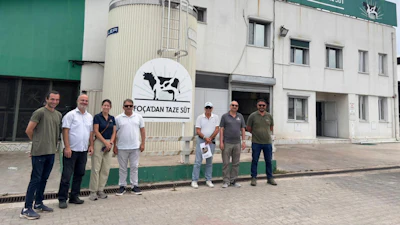
Staff from the U.S. Grains & BioProducts Council’s regional office for Europe, the Middle East and Africa traveled to Türkiye recently to assess how cattle producers use U.S. distiller’s dried grains with solubles in their operations.
Türkiye imports roughly 750,000 metric tons of U.S. DDGS in marketing year 2024/25. The country produces an estimated 30 million metric tons of feed annually, with ruminant feed accounting for about half that volume. The dairy and beef sectors represent a significant opportunity for continued DDGS promotion and customer engagement.
USGBC Regional Director for EMEA Ramy H. Taieb led the delegation, joined by Deputy Regional Director for Europe and the Middle East Ana María Ballesteros and Türkiye Consultant Ibrahim Sirtioglu.
“Most of the dairy farms we visited were familiar with DDGS and had either used it previously or were currently including it in their rations,” Ballesteros said. “While inclusion rates generally ranged from 4% to 20%, producers consistently recognized the ingredient’s nutritional value.”
The team observed that adoption and technical understanding of DDGS may be lower in areas farther from ports, presenting opportunities for targeted educational and market development activities.
Discussions among the nine operations visited showed the importance of working more closely with importers and distributors to improve transportation and quality monitoring practices throughout the supply chain.
Farm inspections confirmed DDGS inventories on hand were in good condition and suitable for feeding. The visits revealed an opportunity for additional technical education on DDGS quality characteristics and the relationship between physical appearance and nutritional value.
“Continued workshops teaching best practices for DDGS handling and storage and quality monitoring will be necessary to protect and improve U.S. DDGS’ standing,” Taieb said.