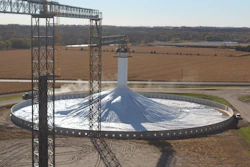
The Helen Delich Bentley Port of Baltimore has broken ground on a new grain transloading facility at the Seagirt Marine Terminal, a project set to streamline agricultural exports for Maryland and neighboring states. The facility, a partnership between Ports America Chesapeake and Frey Commodities, is expected to be operational by August 2026.
Spanning four acres, the facility will feature three grain silos with a combined capacity of 60,000 bushels. It will handle soybeans, corn, wheat and other agricultural commodities, facilitating direct export shipping from farm trucks to containers at the port. This new setup eliminates the current offsite loading process, where farmers must place grain into empty containers away from the port, adding complexity and cost.
“This new partnership with Frey adds transloading capabilities at the Port of Baltimore and creates a more efficient, streamlined supply chain for farmers while strengthening the region’s competitive position,” said Mark Schmidt, president of Ports America Chesapeake. The direct delivery system will reduce truck miles, lower transportation costs, and cut emissions, making the process cleaner and greener.
Maryland Deputy Transportation Secretary Samantha Biddle called the project a significant achievement for Maryland farming and agricultural logistics. Maryland Port Administration Executive Director Jonathan Daniels highlighted the port’s role as the nation’s top handler of farm machinery and said the new facility will further distinguish Baltimore as the leading agricultural port in the U.S.
The facility will also offer rail access through CSX and Norfolk Southern, improving connectivity for Midwest producers and providing a more direct export route. Mike Adamchak, chief commercial officer at Frey, said the project strengthens the ability to connect North American producers with growing global demand.
Maryland Department of Agriculture Secretary Kevin Atticks emphasized the economic benefits for farm families, noting the facility will reduce costs and enhance competitiveness. Maryland Commerce Secretary Harry Coker, Jr. added that the project will attract more business to the state by positioning Baltimore as a premier gateway to global markets.
Once operational, the facility will function as a full-service grain elevator, capable of loading over 200 containers weekly, supporting both truck and rail inbound shipments.