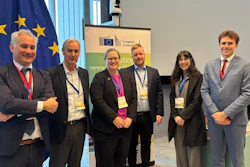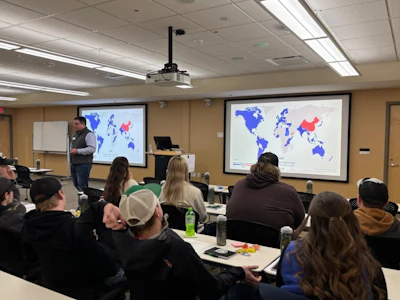
The U.S. Grains & BioProducts Council (USGBC) held a Trade Policy Academy (TPA) event this week to help farmers and agricultural stakeholders understand the latest developments in international trade and their effects on market opportunities.
The event, organized in collaboration with the National Corn Growers Association (NCGA) and Minnesota Corn, brought together industry experts to discuss factors shaping global trade and how these organizations advocate for grower members.
USGBC Director of Trade Policy Andrew Brandt, Manager of Industry Relations Rebecca Starrett, and NCGA Director of Trade, Transportation and Animal Agriculture Michael Granché led presentations covering current and potential trade agreements, the significance of Canada and Mexico as top export markets, and the logistics involved in agricultural trade.
Starrett emphasized the value of educating producers on global trade dynamics. “By offering tools to expand farmers’ understandings of global agricultural trade, we are developing a broader base of support and engagement for our programs,” she said.
The event also featured a panel where producers shared firsthand how strong global trade networks benefit their operations. Starrett noted that combining expert analysis with producer feedback is key to the TPA’s success.
The Trade Policy Academy serves as a vital resource for farmers to navigate international markets and strengthen their role in shaping trade policies that impact U.S. agriculture.