The Port of Galveston opened a new 1,410-foot cargo berth on July 2 as part of a $106 million expansion project that adds 30 acres of capacity and is expected to generate hundreds of new jobs and significant economic growth for the region.
- The new cargo berth at Pier 39-40 is 1,410 feet long and opened July 2 with the MS Toledo delivering roll-on/roll-off cargo from Brazil and the Far East
- The $106 million expansion project was funded by port operating revenues and a $36 million Texas Department of Transportation grant
- The project adds nearly 30 acres to the previously 60-acre facility and includes repairs, repaving, and demolition of outdated infrastructure
- Port of Galveston moves 3 million tons of cargo annually and generates almost 20,000 jobs with a $6.5 billion economic impact statewide
- A future phase will fill a second slip to add another 6 acres of capacity
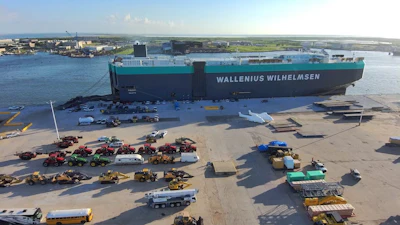
The Port of Galveston’s new cargo berth opened for business July 2 with a Wallenius Wilhelmsen cargo carrier delivering roll-on/roll-off cargo at the West Port Cargo Complex.
The 656-foot-long MS Toledo offloaded hundreds of pieces of heavy construction equipment from Brazil and the Far East to be transported by truck to destinations in Texas and Middle America. Union workers then loaded heavy construction and farm equipment bound for Brazil and Australia.
The 1,410-foot-long berth at Pier 39-40 is part of the port’s $106 million cargo facility expansion project begun in 2024 and completed in 2026. Work to repair and expand the cargo area also included enclosing two outdated slips, filling one slip, repaving and repairing cargo handling areas, and demolishing a decommissioned grain elevator.
The project, which will add almost 30 acres to the previously 60-acre facility, was funded with port operating revenues and a $36 million Texas Department of Transportation grant. A future phase will include filling the second slip to add another 6 acres.
Galveston Wharves Port Director and CEO Rodger Rees said this marks the first time in decades that the port has made a significant investment in its cargo business.
“Driven by cargo tenant demand, the expansion paves the way for major cargo growth to generate hundreds of new jobs and tremendous economic growth for the region,” Rees said.
TxDOT Maritime Division Director Geir-Eilif Kalhagen said the $36 million state investment added capacity and will help the port operate more efficiently as demand continues to grow.
Located on Galveston Harbor, one of the nation’s busiest cargo waterways, the port moves 3 million tons of general and breakbulk cargos annually, including roll-on/roll-off and giant wind turbine pieces. Cargo handling at public and private facilities on the harbor generates almost 20,000 jobs and a $6.5 billion economic impact statewide.