The European Feed Manufacturers’ Federation’s (FEFAC) national feed industry associations confirmed significant adverse impacts from repeated heat waves in many EU Member States, including in Central, Southern and Southeastern Europe as well as in key production regions in Northwestern Europe. This assessment aligns with findings highlighted in the JRC MARS report, published last week and the initial impact assessment published by Copa-Cogeca.
The most severe impacts on the feed supply chains are the shortage of forages and summer crops, which mainly affect the cattle population, with farmers forced to already start feeding winter silage/forages increasing feed insecurity. The expected substantial shortfall in EU corn production will further exacerbate pressure on the feed supply chain in the coming months, reducing availability of corn silage and corn grain on the EU market.
This exceptional situation, already considered worse than the last major EU heat wave recorded in 2018, calls for exceptional measures to help facilitate the EU feed supply chain’s coordinated efforts to alleviate pressure on the supply of essential feed grains and forages. FEFAC members are fully engaged in assisting and supporting downstream value chain partner efforts, ensuring feed and food security and business continuity at the livestock farm level, while safeguarding animal welfare through adaptation of diet formulations to cope with heat stress. However, further contingency measures are urgently required at EU level to help mitigate and prevent the growing risk of disruption of essential feed supplies, particularly in the ruminant sector.
FEFAC said the drought situation calls in particular for initiating again the full range of EU crisis mitigation measures released in 2022 as part of the response to the combined effects of the COVID crisis the direct impact of the Russian invasion in Ukraine, which led to a severe disruption and shortfall in the availability of feed grains, in particular corn, for which the EU faces a structural deficit.
FEFAC experts’ feed market impact analysis
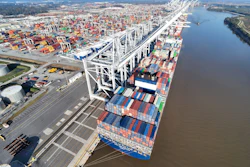
- At this stage, FEFAC market experts expect an additional import need for the EU in the new marketing year of more than 7 million tons of corn, leading to a total EU import estimate of more than 26 million tons (main origins: Ukraine, U.S., Brazil). This situation also requires facilitating access to feed grains from other third countries to diversify the sourcing.
- Increased market access to imported fiber crops/coproducts is also essential especially for ruminants to compensate for the loss of forages (palm kernel expeller, sugar beet pulp, distiller grains). Concerning PKE, the current implementation date of December 31 for the EU Deforestation Regulation will significantly reduce market availability (current EU imports reach 2 million tons annually).
- A lower forage harvest means also increasing the EU feed protein deficit, including for organic feed materials. This will lead to additional pressure and demand on import of soy products used in feed. FEFAC’s latest EUDR trade disruption and economic impact assessment indicates additional direct feed sourcing costs for soy products of more than EUR1 billion (US$1.16 billion) for 2027, with no guarantees on sufficient market availability to meet expected increased EU import demand (35 million tons in 2025). This is economically unviable for EU livestock farmers in the context of depressed prices for most livestock products.
FEFAC recommendations on mitigation measures to ensure feed supply security
In FEFAC’s first evaluation, the EU authorities should envisage the following targeted short-term mitigation measures to strengthen the EU feed chain’s capabilities to compensate (at least partially) for the shortfall of forages and feed grain crops.
The EU should:
- Ensure open transit of and market access to feed grains originating in Ukraine
- Consider temporary derogations at national level, where necessary, for setting risk-based MRLs for imported feed grains destined for exclusive feed use, subject to EFSA evaluation to ensure feed safety, as have been granted in 2022 in compliance with the EU legislation
- Suspend application of EUDR for PKE, to safeguard market access to a key alternative fiber source for ruminants in 2027
- Speed up work for further real simplification measures and reduction of administrative burden for operators, linked to EUDR implementation for soy products used in feed
- Consider extension of the EU temporary derogations for protein sources in organic feed, and for forages
In addition, the EU and member states should allow for temporary derogations at national level for feed truck driving hours including an increase of max load for “cross-border” feed transports to 44 tons (national derogations exist but are not applicable for cross-border transport of feed to drought-stricken regions), including further state aid measures reducing fuel costs in the feed chain. These derogations are necessary due to continued low water levels in main inland shipping corridors, requiring transfer of significant volumes of feed materials to road and rail transport, increasing feed transport costs.
FEFAC also calls for mid-to longer-term measures:
- The EU should accelerate ongoing efforts to strengthen the resilience of homegrown production of feed grains and forages as laid down in the recently published EU Protein Action Plan. This includes improved seeds for drought-resistant crops using NGT technology.
- Targeted investments via European Competitiveness Fund (ECF) in EU transport logistics and infrastructure, including storage capacity, which could lower costs in moving feed grains and forages from EU feed grain surplus regions to deficit areas.
- FEFAC also urges the European Commission to broaden the scope of the Food and Feed Safety Omnibus package, including the ABP legislation and other parts of the EU feed legislation, which could facilitate availability of safe, circular alternative feed resources.
- FEFAC strongly recommends establishing a biomass balance sheet at national and EU level to better monitor availability of eligible biomass resources for feed use, including coproducts from biofuel and other food and non-food industries.