Guatemala officially launched its E10 ethanol blending program on August 22, requiring 10% ethanol to be mixed with regular gasoline, marking a significant milestone for fuel standards in Central America and creating new demand for U.S. ethanol exports.
- Guatemala launched the E10 ethanol program on August 22, requiring 10% ethanol blended with gasoline
- By August 25, approximately 75% of Guatemala's service stations were dispensing E10 fuel
- Guatemala committed to purchasing at least 50 million gallons of U.S. ethanol annually under a trade agreement
- The program involved collaboration between Guatemala's Ministry of Energy and Mines, ethanol producers, fuel importers, and service stations
- The U.S. Grains & BioProducts Council provided technical support and expertise to facilitate the transition
Guatemala officially launched its E10 ethanol blending program on Aug. 22, introducing ethanol-blended gasoline to the country’s fuel market after years of regulatory and technical preparation.
The program requires 10% ethanol to be mixed with regular gasoline, marking a significant development for fuel standards in Central America. The initiative came together through collaboration between Guatemala’s Ministry of Energy and Mines, ethanol producers, fuel importers, terminal operators and service stations.
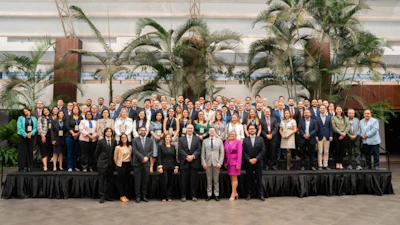
 A Guatemalan delegation met with USGBC President and CEO Ryan LeGrand (rear) at the Council’s headquarters in Washington, D.C., in July as part of a technical and trade mission supporting Guatemala’s E10 implementation.U.S. Grains & BioProducts Council
The ministry established an operational phase from June 30 through Aug. 21 to complete technical verifications and supply chain preparations. Terminals began dispatching E10 into the distribution system on Aug. 22, with ethanol blended at terminals before delivery to stations.
By Aug. 25, about 75% of Guatemala’s service stations were dispensing E10 as locations worked through existing conventional gasoline inventories.
The program creates new demand for U.S. ethanol exports. Under the United States-Guatemala Agreement on Reciprocal Trade signed this year, Guatemala committed to endeavor to purchase at least 50 million gallons of U.S. ethanol annually.
The Council supported the transition through technical expertise, workshops, conferences and trade missions connecting Guatemalan officials with the U.S. ethanol industry. A regional seminar in March brought together government and industry representatives from seven countries, with participation from USDA Under Secretary Luke J. Lindberg and Council President Ryan LeGrand.