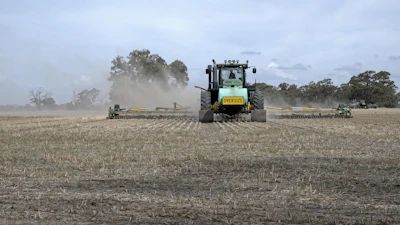
Extreme weather is devastating agricultural regions across the nation, with drought destroying winter wheat crops across the High Plains while excessive rainfall delays spring planting in the Midwest, according to the latest report from the U.S. Drought Monitor. The Southeast continues to experience the nation’s most severe drought conditions, with wildfires burning tens of thousands of acres, while western states face a bleak water supply outlook despite recent precipitation. The U.S. Drought Monitor is jointly produced by the National Drought Mitigation Center at the University of Nebraska-Lincoln, the United States Department of Agriculture, the National Oceanic and Atmospheric Administration and the National Aeronautics and Space Administration.
High Plains winter wheat struggles
Agricultural conditions remain critical across the High Plains, where winter wheat crops face mounting pressure from persistent drought and recent freezes. Nebraska leads the region in crop damage, with 65% of its winter wheat rated in very poor to poor condition. Colorado follows with 54% of its crop struggling, while Kansas reports 41% of winter wheat in distress.
Topsoil moisture conditions reflect the severity of the situation, with Colorado reporting 95% of agricultural areas experiencing very short to short moisture levels. All High Plains states except North Dakota show at least 40% of topsoil in poor condition, hampering spring planting and crop development.
Texas winter wheat faces particularly harsh conditions, with 56% of the state’s crop rated very poor to poor, while Oklahoma reports 45% of its winter wheat in similar distress. Western sections of both states remain critically dry, creating poor rangeland and pasture conditions alongside an elevated wildfire threat.
Rain continued to bypass the central and southern High Plains, leaving rangeland, pastures and winter wheat in desperate need of moisture. Drought continued to worsen in eastern Colorado and western sections of Kansas and Nebraska, though some areas received relief, including parts of southern South Dakota and eastern portions of Nebraska and Kansas.
Midwest sees mixed conditions
Heavy precipitation across western and southern portions of the Midwest has provided drought relief to some areas, though conditions remain uneven across the region. Wisconsin and Michigan have experienced particularly wet conditions, with the Agriculture Department rating 48% of Wisconsin’s topsoil moisture as surplus and 42% in Michigan reaching similar levels.
The excessive moisture has created planting delays in some areas. Michigan typically plants 51% of its sugarbeet crop by April 26 based on five-year averages, but this year’s wetness allowed only 3% of the crop to be planted by that date.
Portions of the Great Lakes states have turned quite wet in recent weeks, with some areas experiencing record flooding earlier in the month. The wettest areas received a break from excessive rain during the current monitoring period, though conditions remain challenging for agricultural operations.
Southeast becomes drought epicenter
The Southeast has emerged as the nation’s most severe drought zone, with Georgia and South Carolina reporting 97% of agricultural topsoil moisture rated very short to short as of April 26, according to the U.S. Department of Agriculture. Virginia follows closely with 88% of topsoil in poor condition, while North Carolina reports 81% of its agricultural regions facing moisture deficits.
Wildfires have intensified the crisis across the region. Two major fires in southern Georgia have burned more than 50,000 acres combined, with the destructive Highway 82 fire in Brantley County alone scorching over 22,000 acres and destroying more than 100 homes. Drought conditions continue to worsen throughout the Southeast, with extreme to exceptional drought categories expanding across the region.
Western water crisis deepens
Despite scattered precipitation across western states, the overall water supply outlook remains dire for the remainder of spring and summer 2026. Most mountain snowpack has already melted except in the northern Rockies, leaving reservoirs and water systems vulnerable.
The crisis has prompted emergency action from federal authorities. The Department of Interior has begun releasing water from Flaming Gorge Reservoir downstream to Lake Powell to boost water levels, while water normally destined for Lake Mead will be held in Lake Powell. These measures reflect growing concerns about hydroelectric generation capacity in the Colorado River Basin.
Forecast offers limited relief
Weather patterns over the next several days promise active conditions across the South, with 1- to 4-inch rainfall totals expected from Texas to the southern Atlantic States. However, the northern and central Plains and Midwest will see little precipitation, while generally dry weather will cover the West aside from late-season snow in the central and southern Rockies.
Temperature patterns will bring cooler-than-normal conditions to most areas east of the Rockies, with frost and freeze warnings extending into the weekend across the northwestern Plains and upper Midwest. The National Weather Service outlook for May 5-9 calls for continued cool conditions in most areas east of the Rockies, contrasting with warmer weather from the Pacific Coast to the northern Rockies.