
Renewables segment drives earnings growth
The company’s renewables division generated $40 million in pretax income during the first quarter, benefiting from record production levels, effective merchandising operations, and favorable biofuels policy developments. Ethanol margins remained solid throughout the quarter as increased demand and higher gasoline prices supported the sector.
“Ethanol margins were solid during the quarter on increased demand and higher gasoline prices,” said President and CEO Bill Krueger. “Our renewable feedstock business had a strong quarter as values and volumes improved following the finalization of the Required Volume Obligations.”
The renewables segment achieved record quarterly production while qualifying for higher-tier 45Z tax credits, which contributed $26 million to first-quarter results. The company’s merchandising operations also performed well, largely driven by volatility surrounding renewable volume obligation announcements that resulted in higher distillers corn oil and renewable identification number values.
Agribusiness shows resilience amid market volatility
The agribusiness segment recorded pretax income of $7 million and adjusted pretax income of $18 million, representing a significant turnaround from the prior year’s pretax loss of $10 million. The improvement reflected the segment’s diversified portfolio and ability to capitalize on returning market volatility.
“With the return of some market volatility, our merchandising businesses had a solid quarter,” Krueger noted. “Results from our premium ingredients business more than doubled the prior year, as we are focused on serving our key CPG customers.”
The segment benefited as price rallies during the quarter brought more old crop bushels to market, creating opportunities for the company’s merchandising operations. Fertilizer operations also improved on higher margins as the company strategically positioned product ahead of spring planting season.
Capital investments support growth strategy
The Andersons continues advancing several capital projects designed to enhance operational efficiency and expand capacity. Current initiatives include adding soybean meal export capacity at Port Houston, replacing and modernizing grain storage at Toledo port assets, and implementing corn and wheat cleaning projects across existing facilities.
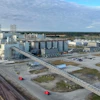
The company’s Clymers, Indiana ethanol debottlenecking project, announced in December, remains in early stages and on schedule. Upon completion, the project will increase the plant’s annual production capacity to approximately 170 million gallons.
“We continue to evaluate capital deployment to drive growth and expansion of our existing assets, make our operations more efficient, while analyzing potential acquisitions,” Krueger said. The company expects to complete several capital investments during 2026 while maintaining focus on achieving its $7.00 run-rate earnings per share target by the end of 2028.
Strong financial position supports operations
Executive Vice President and CFO Brian Valentine highlighted the company’s improved cash generation and solid balance sheet position. “Our businesses generated improved cash flows on strong earnings this quarter,” Valentine said. “We expect to continue to fund many of our growth projects internally and our debt remains at a modest level.”
The company maintains debt levels below its long-term target of 2.5 times EBITDA while continuing capital investments. Cash spent on capital projects totaled $52 million during the quarter as the company advances facility improvements and growth initiatives.
Market outlook remains dynamic
Looking ahead, The Andersons expects continued opportunities from market volatility while positioning for seasonal demand patterns. The company anticipates its asset footprint, particularly in western regions, will capture delayed basis appreciation over coming quarters.
Anticipated corn plantings above the five-year average present expanded margin opportunities in the current higher-priced environment. The fertilizer business appears well-positioned heading into the second quarter and spring application season.
Ethanol fundamentals continue showing support from elevated demand, including increasing global blend rates, high gasoline prices, and planned industry maintenance. Renewable feedstocks should also benefit from robust renewable volume obligations established earlier this year.
The company recorded an effective tax rate of 14 percent for the quarter, impacted by non-taxable 45Z income, and anticipates a full-year adjusted effective rate of approximately 14 to 18 percent.