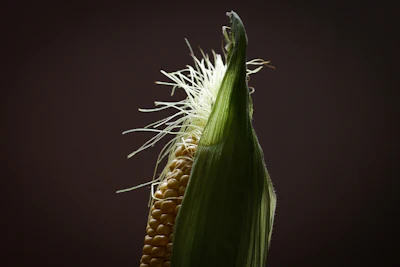
Maize breeders have a sharper map for a stubborn nutrition trait. Researchers reported 14 significant genomic regions tied to kernel protein content across three doubled-haploid maize populations, work published in BMC Genomics.
Kernel protein content is a determinant of nutritional quality, but it does not behave like a simple switch. In the study, kernel protein content showed a continuous, approximately normal distribution across the doubled-haploid populations: many loci contribute to the final number, and their effects depend on the genetic background in which they are deployed.
The mapping design was built around that complexity. Researchers developed three doubled-haploid populations from four elite maize inbred lines with contrasting protein contents, then used those populations to look for stable signals rather than one-off associations. Broad-sense heritability ranged from 70.17% to 73.93%, showing genetic factors accounted for most of the observed phenotypic variation.
Using 5,730 SNP markers, the research team built three genetic linkage maps with an average marker interval of 1.20 centimorgans. That resolution allowed the study to separate multiple protein-linked regions and compare signals across populations, instead of relying on a single-family snapshot.
The core result was a set of 14 significant QTLs controlling kernel protein content. Individual QTLs explained 3.70% to 18.04% of phenotypic variance, a range that points to both incremental loci and stronger-effect targets. Stable and overlapping QTLs appeared across populations, including a prominent QTL cluster on chromosome 7.
Genome-wide two-locus scanning detected 35 significant epistatic pairs, and in the C8806 population, epistatic interactions accounted for as much as 58.78% of phenotypic variance. Additive effects matter, but gene-by-gene interactions can dominate the protein-content outcome in some backgrounds, making allele combinations as important as individual markers.
Twelve of the 14 QTLs colocalized with known protein- and amino acid-related QTLs, supporting the reliability and conservation of those genomic regions. Colocalization with prior results also helps prioritize loci for marker development, validation and introgression.
The candidate-gene work points toward plausible biology rather than abstract map positions. Seven candidate genes were identified within QTL intervals, with roles tied to nitrate uptake, nitrogen signal transduction, amino acid transport and the synthesis, accumulation and transcriptional regulation of storage proteins. Those pathways track the trait's practical expression: how nitrogen enters the plant, how it is moved and signaled, and how it ultimately contributes to kernel storage protein.
The breeding takeaway is direct. Kernel protein content has a polygenic architecture, with additive QTLs layered over substantial epistatic effects, and the most useful targets are the stable, overlapping loci that hold up across populations. The study positions those regions and candidate genes as a foundation for marker-assisted selection, map-based cloning and molecular breeding aimed at improving maize protein content and nutritional quality.