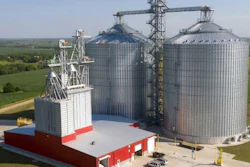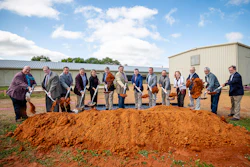
ADM recently opened a new premix and feed additives production facility in Apucarana, Paraná, Brazil, marking a significant expansion of the company’s animal nutrition capabilities in South America. The 7,500-square-meter facility features an annual capacity of approximately 40,000 tons and can deliver up to 10 tons per hour.
Technology drives operational excellence
The plant represents one of the most technologically advanced premix operations in Brazil, combining automation with traceability processes that enhance predictability across the protein value chain. The facility features enhanced mixing precision, dosage control systems and cross-contamination mitigation capabilities.
“Our innovation process is focused on improving our customer’s production performance by reducing losses through higher bioavailability and feed conversion,” said Raphael Bozola, ADM’s vice president of animal nutrition for South America. The executive emphasized that the plant symbolizes ADM’s strategic decision to grow with control, standardization and operational excellence.
Advanced traceability systems
The Apucarana facility deploys systems that deliver faster, more precise monitoring of materials and processes, reducing operational risk. The plant can comply with stringent standards for quality, safety and process segregation, supported by advanced tracking technology and full mapping of all ingredients used in each premix formulation.
Unlike traditional systems with shared mixers, the new facility uses individualized silos and a dedicated mixing system. This segregation approach reinforces formulation integrity, particularly for “clean” lines free from ionophores and markets requiring high quality standards.
The facility can produce customized formulations for each producer without cross-contamination risk. Bozola noted that advancing control levels delivers additional gains in predictability across the value chain while reinforcing customer production performance reliability.
The automation and systems prepare the business for the future of animal nutrition, which Bozola described as “more demanding, more regulated and increasingly data-driven.”