Feed mill operators looking to reduce one of their largest operating expenses should start with comprehensive energy monitoring, but they don't need to implement an overwhelming plant-wide system all at once, according to Steve Buehne, sales territory manager for CPM.
Speaking at an IPPE TECHTalk on January 27 in Atlanta, Buehne outlined practical energy monitoring strategies, emphasizing that visibility into energy consumption enables feed mills to make data-driven decisions that reduce costs, improve equipment maintenance, and optimize production.
 Steve Buehne, sales territory manager, CPM
Three reasons to monitor
Buehne, who has 39 years of experience in feed mill automation, identified three primary benefits of energy monitoring. First, it directly reduces production costs by identifying inefficiencies. Second, it enables preventive maintenance by detecting equipment problems before they cause failures. Third, it optimizes production scheduling and operations across the facility.
"If I'm running along and all of a sudden I've got something that's using a lot more power, I can flag that to the maintenance people and say, 'hey, go check this out. We got a bad bearing, we got something going on, the hammers are worn, or the screen's worn,'" Buehne explained.
The cost impact of worn equipment can be substantial. Buehne presented calculations showing that worn rolls or dies reducing output by just 10 tons per hour wastes $937 monthly, or more than $11,000 annually.
Monitoring methods and equipment
Feed mills have multiple options for implementing energy monitoring. Power monitoring devices from manufacturers like Phoenix Contact and Allen-Bradley can be installed at the plant's electrical front end to track voltage, current, energy consumption, and power factor. These devices connect directly to programmable logic controllers via Ethernet.
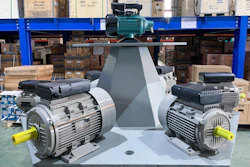
Variable frequency drives serve double duty as both motor controls and individual power monitors, with higher-level VFDs providing detailed metrics including kilowatt totalizer and demand information.
"People are putting VFDs on just about every motor they can think of, anything over 40 horsepower, not just to change the speed, but to get that power," Buehne said. "This is like a power monitor for that individual unit."
Practical implementation strategies
Rather than attempting comprehensive energy monitoring immediately, Buehne recommended a phased approach starting with high-impact equipment.
"The big thing when you're implementing something like this is not to go all out," he said. "Start small, maybe one process or one motor that you know is using a lot of energy, and then let it grow."
A second strategy involves installing VFDs strategically throughout the facility to prevent costly demand spikes and reduce downtime. Third, operators should track energy consumption per ton of production to identify efficiency changes.
"If I'm monitoring the energy and last week we ran this starter and it ran really easy, now all of a sudden this week it's running really bad. Well, it turns out the nutritionist put a bunch of DDGs in the recipe," Buehne said. "Now I can show him, 'okay, you cost me a lot of money here because the product took a lot longer to run and used a lot more energy.'"
Beyond major process equipment, Buehne identified often-overlooked energy waste including air compressor leaks, excessive surge bin vibrator activation, and conveyors left running unnecessarily. Mills should also coordinate motor startups to avoid expensive peak demand charges.
"There's no magic bullet to saving energy," Buehne concluded. "The main thing is to collect that data so that you can make informed decisions."