In an episode of the Feed & Grain Podcast, Jonathan Medemblik, marketing manager at Walinga, to discuss a cutting-edge GPS location matching system designed to improve accuracy and efficiency in feed delivery. This technology assigns unique GPS coordinates to each bin on a farm and uses geofencing to ensure that feed compartments on trailers unload only at their designated destinations — a solution aimed at reducing costly mistakes and streamlining operations.
“Human error is a very real thing,” Medemblik said. “You can have new drivers changing routines, people covering for others — mistakes happen. Tons of feed could be put into the incorrect destination bin.” Such errors can have serious consequences, from contaminating organic flocks to delivering medicated feed to the wrong animals, potentially compromising animal health and farm productivity.
The GPS system works by mapping the precise location of each bin on a farm, giving every bin unique GPS coordinates. “Each bin actually has a GPS coordinate. Using geofencing, we can map the top of the bin to a GPS location,” Medemblik explained. “At the mill, the software assigns the pockets on the trailer to certain GPS locations, so the trailer can only unload at that specific bin on the farm.”
This approach drastically reduces the risk of unloading errors. “It can prevent human error from accidentally opening the wrong compartment or gate in a trailer at the wrong destination,” he added.
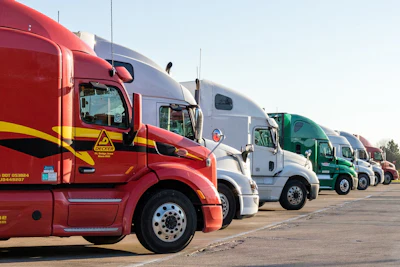
The technology integrates seamlessly with existing trailers and mill software. “We can integrate it into existing trailers. It’s basically hardware and controls inside the trailer, a GPS sensor on the boom, and software back at the mill that keeps track of all the information,” Medemblik said. “Once you train the trailer on a farm — mapping the trailer’s boom position to the bins — it retains that information for future deliveries.”
Beyond preventing errors, the system offers detailed record-keeping benefits. “Now they have records of every single load, each pocket inside the trailer, and which bin it went into on the farm,” Medemblik noted. “They can keep very good track of all that stuff.”
Importantly, the system maintains driver control with built-in manual overrides. “Obviously, things like this have to come with manual overrides because human error is still a thing,” Medemblik said. “If there’s an issue with the GPS location or the system won’t unload, the driver can get a unique code from the dispatcher to unlock and continue the delivery. Everything is relocked for the rest of the trip, and all overrides are logged.”
The GPS system also communicates with mill software through secure Wi-Fi connections, automatically syncing data when trailers enter the yard. “Most feedmill management software can implement modules to pass data automatically to the trailer, avoiding extra work,” Medemblik explained. “The trailer connects to the mill Wi-Fi and uploads all delivery data seamlessly.”