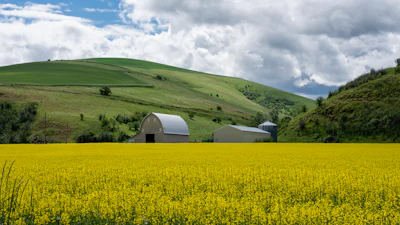
Bayer and Neste have partnered to expand winter canola production in the Southern Great Plains to meet growing global demand for renewable diesel and sustainable aviation fuel, with Bayer launching newgold winter canola hybrids in fall 2027 that offer improved yields, oil content, and profitability for farmers.
- Global demand for renewable diesel and sustainable aviation fuel is expected to nearly triple by 2040, reaching about 40 billion gallons.
- Bayer's newgold winter canola hybrids launching in fall 2027 feature winter-hardiness, TruFlex technology, and pod shatter resistance for higher yields and oil content.
- Winter canola provides farmers a profitable rotation option with wheat while creating new income streams through the biofuels market.
- The partnership creates a value chain network ensuring farmers have reliable market access and supporting supply chain collaboration.
- High-protein meal from winter canola grain serves feed markets for dairy, beef cattle, poultry and swine operations.
Bayer and Neste have finalized a commercial agreement to expand winter canola production in the Southern Great Plains, aiming to meet surging demand for renewable diesel and sustainable aviation fuel.
The partnership will help Bayer scale its newgold winter canola across the region, providing lower-carbon-intensity feedstocks for biofuels. Global demand for these fuels is expected to nearly triple by 2040, reaching about 40 billion gallons, according to the companies.
“In times of geopolitical tensions, the need for more energy security and resilience while decarbonizing the transportation sector leads to growing demand for renewable fuel,” said Frank Terhorst, head of strategy and sustainability for Bayer’s Crop Science division.
The Southern Great Plains represents an untapped opportunity for winter canola cultivation, Terhorst said. The crop will give farmers a profitable rotation option with wheat while improving land use and creating new income streams through the biofuels market.
Beyond fuel production, the high-protein meal from winter canola grain will be sold into feed markets, providing additional sources for dairy and beef cattle, poultry and swine operations.
Bayer and Neste are building a newgold network with other value chain partners to support winter canola expansion and ensure farmers have reliable market access.
“Maximizing the contribution of novel types of raw materials to support growth in renewables requires open supply chain collaboration,” said Artturi Mikkola, senior vice president of renewable products feedstock sourcing and trading at Neste. “By building value chains, we can turn agricultural innovations into scalable realities for growers and energy markets.”
Bayer plans to launch newgold winter canola hybrids in fall 2027. The hybrids offer several benefits: winter-hardiness, TruFlex (Bayer’s second-generation Roundup Ready trait technology) and pod shatter resistance. These features combine to deliver strong yield potential and higher oil content.
The TruFlex winter canola, sold under the newgold seed brand, aims to create a new profit opportunity for Southern Great Plains growers, giving them flexibility in deciding how and where it fits in their operations.
Biofuels can help the transportation sector transition to cleaner energy, particularly in areas where electrification isn’t practical, such as aviation, rail, heavy-duty equipment and marine applications. These fuels are produced from renewable organic materials including corn, soy, canola and other intermediate oilseed crops.