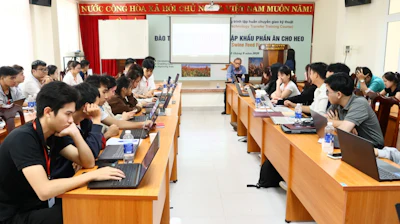
The U.S. Grains & BioProducts Council held its second livestock feed training program last week at Tay Nguyen University in Dak Lak, Vietnam, targeting students who will soon enter the country’s growing livestock and feed industries.
The program focused on the nutritional and economic benefits of U.S. corn and corn co-products, including distiller’s dried grains with solubles (DDGS), as well as U.S. sorghum. These feed grains work well for Vietnam’s poultry, swine and aquaculture sectors.
“This training marks our second collaboration with Tay Nguyen University after it proved to be very effective in building connections to the next generation of Vietnamese agricultural leaders,” said Caleb Floss, USGBC deputy regional director for Southeast Asia and Oceania.
Floss noted Vietnam has developed into a middle-income economy with rising consumer demand for protein, and the Council is helping build livestock capacity with U.S. feed grains.
The training session started with an overview of the U.S. feed grain logistics system and DDGS production. Students then participated in workshops on feed formulation using data sets and comparing input prices.
Later sessions covered quality factors of ingredients, nutrition requirements by species and moving from initial formulations to production.
Graduates and faculty members expressed strong interest during the course and asked for more advanced training to extend their knowledge of U.S. corn, DDGS and sorghum.
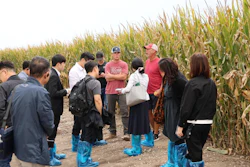
After the training, the Council’s delegation visited feed manufacturers and livestock producers in Binh Dinh and Gia Lai Province to gather market intelligence and identify opportunities for future collaboration.
“Promoting U.S. coarse grains through technical training for future livestock industry participants lays the groundwork for successful trade long into the future,” Floss said.
The delegation included Dr. Budi Tangendjaja, regional technical consultant, and Vietnam representatives Tran Trong Nghia and Vu Ngan Giang.