Feed and grain managers can improve profitability during difficult market periods by optimizing asset utilization through key metrics like asset turnover ratio, inventory turnover, and capacity utilization rate, combined with strategies to maximize financial and physical asset efficiency.
- Asset turnover ratio measures sales generated per dollar invested in assets, with feed and grain firms typically generating $0.30 to $0.50 in revenue per $1.00 invested.
- Inventory turnover focuses on how quickly inventory is sold and helps manage working capital, preventing quality deterioration and excessive financing costs.
- Days sales in accounts receivable measures collection efficiency; too high indicates slow customer payments affecting profits, while too low may signal overly strict credit policies.
- Capacity utilization rate calculates the percentage of storage, mill, or fleet capacity being used, helping optimize returns on physical asset investments.
- Improvement strategies include preventive maintenance programs, optimizing workflows, implementing asset tracking technology, and enhancing employee training to boost operational performance.
As feed and grain managers negotiate another difficult period for the agriculture economy, actions that improve efficiency and reduce costs take center stage. The first line of focus is typically operating costs: How can we reduce overtime, cut temporary help, lower health insurance costs, pull back on marketing, training or literally everything else on the expense portion of the income statement?
However, there is another set of levers to pull: those that help you get more out of your investment in the assets of your feed and grain firm. In a tough market, managers need to explore all the avenues to get more efficient, including the firm’s investment in its assets. In this Manager’s Notebook, we’ll look at how feed and grain managers can make their assets work harder and their firm more efficient.
What are your firm’s assets?
Before we get into how you might measure asset use efficiency and ways to improve your firm’s utilization of assets, we need to define what items comprise your assets. Assets are the things that you use to generate revenue for your feed and grain business. They are grouped into two broad categories: current and fixed assets.
Current assets are typically defined as those assets you could liquidate and turn into cash within a year. Examples of current assets would be cash, feed and grain (inventory) your business owns, accounts receivable and prepaid expenses such as insurance or rent.
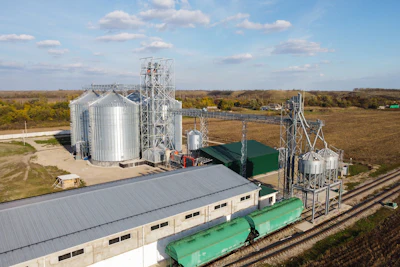
Fixed assets (sometimes called long-term or non-current assets) are tangible, physical assets used to support operations and typically have lives longer than a year. Fixed assets can be thought of as investments that enable you to actually do business. Examples of fixed assets include buildings, equipment, land, tools and vehicles.
Asset use efficiency
Measures of asset use efficiency tell you how effectively your grain and feed business utilizes its assets (current and fixed) to generate revenue, serving as a key indicator of operational performance and profitability. Within limits, you want all the money that’s tied up in inventory, accounts receivable, feed mills, grain elevators, semi-trucks and trailers (and all the other physical assets that support your business) to work as hard as possible.
These asset-use efficiency calculations indicate how well you manage this important set of resources to maximize output, with higher ratios suggesting better productivity. Below are several definitions of measures of asset efficiency.
- Asset turnover ratio
This is calculated as: revenue (total sales)/total assets
The asset turnover ratio measures sales generated per dollar invested in assets, and a higher ratio indicates more efficient use of the total investment in your firm. In the feed and grain industry, asset turnover ratios typically range from 0.30 to 0.50 (or 30% to 50%) — meaning that firms generally generate $0.30 to $0.50 of gross revenue for every $1.00 invested in assets. Management strategies that affect this ratio are primarily focused on increasing your sales volume (without increasing your investment in assets), using assets more effectively (see some of the measures below), increasing prices where possible, getting rid of ineffectively used assets, reducing accounts receivable or inventory (see below), or finding better ways to use your available cash.
Inventory turnover
This measurement gets at the efficiency of a specific, important asset: inventory. It is calculated as: cost of goods sold/average inventory
This measure focuses on the speed of selling your inventory or, as is often described, how many times you "turn" your inventory during a year. It is one measure of how successfully you are managing your working capital (your current assets less your current liabilities). In general, you want to make your investment in inventory work as hard as you can, driving as many sales dollars as possible from that investment. If too much working capital is tied up in inventory, bad things happen. Poor inventory management and too much inventory can drive up interest expense — if short-term financing at a high rate of interest is being used to finance your investment in inventory. If you aren’t turning inventory quickly enough, you may see quality problems as the condition of your grain or feed inventories deteriorate. However, inventory turnover that is too high can be a problem as well — indicating lost opportunities for sales because of out-of-stock conditions or inability to meet delivery requirements.
- Days sales in accounts receivables
Another measure of efficiency is found in the average collection period of your account receivables (AR). This is calculated as: (accounts receivable/net sales) X 365 days
If your days sales in accounts receivables ratio is too high, your customers are not paying you in a timely way. An extended collection period for accounts receivable could mean lower profits because of added account collection costs, interest on funds needed to support the accounts receivable and increased bad-debt losses. On the other hand, too low a figure here could indicate an overly strict credit policy leading to lost sales.
Asset utilization calculations
These calculations measure and focus on the actual physical usage of equipment as opposed to ratings of financial efficiency. These metrics are useful for optimizing turnover and reducing idle time which helps to improve the return on your investments.
Examples in the feed and grain industry include:
Storage turnover ratio, calculated as number of bushels shipped or marketed/elevator capacity in bushels. This ratio provides insight into how efficiently you are using your investment in storage capacity. Here, a higher number is preferable.
Capacity utilization rate, calculated as number of bushels in storage/total number of bushels capacity. This is another measure of storage efficiency and measures the percentage of capacity being utilized at a specific time (say peak harvest). For example, if your elevator is storing 6,992,000 bushels of grain on November 15 and your total storage capacity is 9.2 million bushels, capacity utilization = 6,992,000/9,200,000 = .76 or 76% capacity utilization. You can construct similar capacity utilization measures for your feed mill and your truck fleet, as well as any other physical asset that supports operations.
Improving asset use efficiency
As you well know, a key element of management is optimization and efficiency. Getting better starts with knowing where you are. But, once you better understand areas you can improve, what do you do next?
Strategies for improving the utilization of your financial assets include:
- Keeping available cash balances invested at the highest possible rates (given your cash use needs)
- Staying on top of accounts receivable and keeping customers current with their payments
- Monitoring inventory levels closely and taking prompt action when inventories look like they are falling too low or building too quickly
Feed and grain managers are looking for the “sweet spot” or the “Goldilocks Zone” for measures like inventory turnover (not too high and not too low) and days sales in AR (again, not too high or too low).
Strategies for improving the efficiency of your physical assets include implementing preventive maintenance programs to reduce downtime, optimizing production and logistical workflows, investing in technology to track utilization of existing assets and to replace outdated and inefficient assets and enhancing employee training to improve operational performance.
There may be many (or most) days where, as manager for your feed and grain business, you feel like a juggler. Juggling personnel management, demanding customers, relationships with your bank or other lenders, and communicating and interacting with your board of directors are all important and “urgent” priorities.
But equally as important are the assets that make it possible for you to do business. The best feed and grain managers know they must keep all of the balls in the air, balancing their attention across the full portfolio of aspects that make the business profitable. Now you can make your investment in assets work harder.