The Senate Agriculture Committee approved the Agricultural Act of 2026 on a 12-11 party-line vote on September 16, with Senator Mitch McConnell's return providing the deciding vote. The bill now advances to the full Senate and includes provisions for poultry, grain standards, and conservation programs, though it still faces opposition from some agricultural and labor groups.
- The farm bill passed the Senate agriculture committee 12-11 on September 16
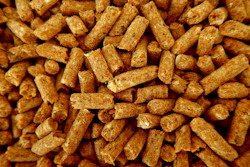
- The bill includes the Innovative FEED Act, allowing FDA to review novel animal food ingredients through streamlined approval process
- Provisions include hot rotisserie chicken for SNAP purchases, poultry health programs, and reauthorization of the U.S. Grain Standards Act
The U.S. Senate Committee for Agriculture, Nutrition and Forestry advanced the Agricultural Act of 2026, commonly known as the farm bill, on a party-line 12-11 vote Sept. 16, after Sen. Mitch McConnell, R-Ky., returned from an extended health-related absence to cast the deciding vote.
The panel had failed to advance the bill in August, when Republicans lacked enough votes without McConnell.
With its passage from the agriculture committee, the bill now heads to the full Senate.
Committee Chairman John Boozman, R-Ark., called the vote "a critical step" toward a fully updated farm bill but said more bipartisan support is needed. "Farm country is hurting and needs results now," Boozman said. "I will always stand with the families who feed America and the world."
Ranking Member Amy Klobuchar, D-Minn., struck a more conciliatory tone than she had in August, crediting a package of bipartisan amendments and Boozman's acknowledgment of concerns over shifting Supplemental Nutrition Assistance Program costs to states. But she said the one-year delay in the bill isn't enough. "A state with an error rate twice that of Minnesota will pay nothing in the second year, whereas states that have reduced their error rates will still be disadvantaged," Klobuchar said, calling for a two-year delay instead.
National Chicken Council reacts
The National Chicken Council thanked Boozman for advancing a bill without provisions that would alter how chicken is contracted or marketed, and credited an amendment from Sen. Jim Justice, R-W.Va., adding hot rotisserie chicken to SNAP-eligible purchases. NCC President Harrison Kircher also pointed to poultry health and disease monitoring programs, broiler export support and natural disaster assistance.
Feed and grain groups hail regulatory wins
Feed and grain industry groups highlighted regulatory wins. The American Feed Industry Association praised inclusion of the Innovative FEED Act, which would let the U.S. Food and Drug Administration review certain novel animal food ingredients — those offering benefits such as improved animal health or reduced environmental impact — through the existing Food Additive Petition process rather than the current drug-review pathway. "The animal food industry thanks Chairman John Boozman ... for recognizing our industry's role in delivering innovative solutions that advance animal and public health," said AFIA President and CEO Constance Cullman.
The National Grain and Feed Association praised the same provision along with reauthorization of the U.S. Grain Standards Act, which governs the federal grain inspection and weighing system. NGFA President and CEO Mike Seyfert called it central to "confidence in U.S. grain markets," and noted the bill maintains the current Conservation Reserve Program acreage cap while continuing Market Access Program and Foreign Market Development funding.
NPPC pleased, still concerned about Prop 12
The National Pork Producers Council said it is pleased with the bill's movement but is still seeking relief from California's Proposition 12 animal housing law, which the House version addressed but the Senate version did not. "Pork producers deserve a robust farm bill, which should come with protection from being forced to rebuild our barns every time another state decides it knows what is best for animal welfare," said NPPC President Rob Brenneman, a pork producer from Washington County, Iowa. Illinois veterinarians Bill Hollis and Aaron Lower, cited by NPPC, argued a state-by-state patchwork would make it harder to incorporate new scientific evidence into animal housing standards.
Other reactions
Other general agriculture groups, including the American Farm Bureau Federation, Iowa Corn Growers Association, National Association of State Departments of Agriculture and U.S. Wheat Associates, praised the committee's action. AFBF President Zippy Duvall noted more than 200,000 family farms have closed in the past decade. National Farmers Union President Rob Larew welcomed wins on country-of-origin labeling and year-round E15 but said the bill won't be enough to reverse the broader farm economy crisis.
Not every group is supportive. The Meat Institute opposes a Thune-authored amendment requiring USDA and the U.S. Trade Representative to reinstate mandatory country-of-origin labeling for beef, citing an estimated $835 million annual cost to the supply chain and possible trade retaliation from Canada and Mexico. The United Food and Commercial Workers union, which represents 1.2 million food and grocery workers, opposed the bill over its SNAP provisions and lack of worker protections.
The bill needs 60 votes to clear the full Senate before facing conference with the House's Farm, Food, and National Security Act of 2026, passed 224-200 in April.