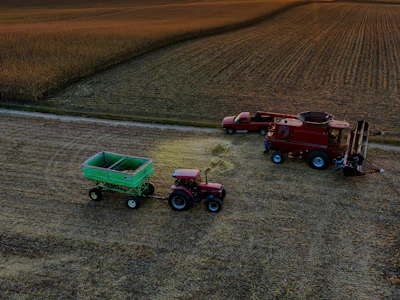
As combines roll into the fields this fall, American farmers are harvesting more than soybeans — they’re reaping the effects of trade and stalled governance. The U.S. farm economy sits at the crossroads of global politics, domestic gridlock and shrinking profit margins.
China is still completely absent from the U.S. soybean market. The world’s largest buyer of oilseeds has yet to make a single purchase from this fall’s U.S. crop, and patience among producers is wearing thin. The situation recalls the trade war of 2018, but this time the stakes are higher: China hasn’t just slowed imports — it’s learned to live without them.
A standoff like this from China hasn’t happened in more than two decades. While traders still hold out hope for a late-season rebound, economists warn that the window is starting to close. Soybean prices across the Midwest have fallen below 2018 levels, while fertilizer, seed and fuel costs have surged. For many producers, this harvest will deepen operating debt rather than pay it down.
Without renewed demand or supplemental payments, there’s going to be a lot of soybeans with not too many places to go.
China proves it can buy elsewhere
China’s actions are sending a clear signal: the U.S. is no longer indispensable. China is showing the U.S. in this tariff conflict that they can meet their soybean needs from South America.
Brazil has seized the opportunity to capture market share, while Argentina briefly lifted its export tax to entice Chinese buyers. Once valued for their consistency and quality, U.S. soybeans are now losing ground to competitors investing heavily in logistics and port capacity.
South America’s growing dominance cannot be ignored. Congress has been pressed to accelerate domestic market growth through biofuels, renewable diesel and aquaculture, but those initiatives are five- to ten-year solutions. In the short term, the administration needs a resolution with China.
Politics meets the plow
What’s worse is at the moment farmers need certainty, Washington is at a standstill. The federal government shutdown has frozen key USDA operations, delaying reports and jeopardizing the next World Agricultural Supply and Demand Estimates (WASDE) report.
The impasse in Congress — and the broader trade standoff with China — should eventually break under economic gravity. China will ultimately tire of paying premiums for South American beans, which cost about $1.60 more per bushel, and that U.S. leverage will restore market access.
But for farmers trying to balance their books this fall, “eventually” feels too far away. A $10 billion relief package from the administration has been proposed, but payments may not reach producers until next fall.
A Band-Aid on an open wound
The problem is relief checks don’t rebuild markets. They’re more like a stopgap to plug the hole of economic shortfall caused by lost trade.
What producers truly need is market access. U.S. soybean growers are expected to lose about $109 per acre this year across 83 million acres — nearly $9 billion in total losses. Tariffs and retaliatory duties have handed Brazil and Argentina a 20% price advantage in China, and when Argentina briefly took an export tax holiday, Chinese buyers responded immediately.
The same thing would happen with U.S. soybeans if we had a level playing field.
The cost of policy paralysis
The government shutdown has only magnified rural anxiety. Beyond halting USDA reports, it has disrupted the processing of conservation contracts, crop insurance adjustments and export credit guarantees — lifelines that help farmers manage risk.
Markets thrive on transparency, yet the current environment offers little of it. With federal economists furloughed, traders must rely solely on private data sources.
More troubling, the shutdown underscores a broader failure of governance. Whether the argument is over budget priorities or trade tactics, rural Americans are the ones paying the price for political theatrics.
A harvest of uncertainty
Resilience is ingrained in rural America.
Farmers have survived droughts, floods and policy swings, but no amount of grit can counteract uncertainty that stems from policy paralysis.
Trade peace may eventually return, but the long-term damage to U.S. reliability won’t easily be repaired.
Washington can write relief checks, but it can’t legislate trust.
Until both trade partners and producers regain confidence in the system, America’s most productive acres will remain hostage to politics.
While the farm sector has endured its share of downturns, this one feels different. It’s not only about prices — it’s about predictability. Without reliable markets abroad and a functioning government at home, even the most efficient producers can’t plan for the future.